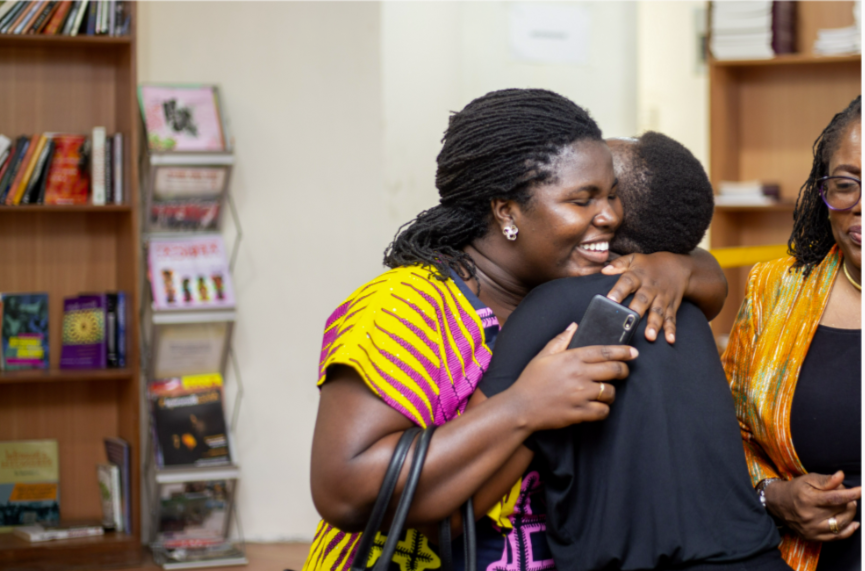
The African Women’s Development Fund (AWDF) isn’t some distant donor sitting in an office far away. It is the first pan-African feminist fund on the continent, founded by African women for African women.
Since 2000, AWDF has distributed over $68 million to more than 1,500 women’s rights organizations across 47 African countries and 5 Middle Eastern nations. These are not small numbers. And right now, their Open Grants application window is rolling, meaning you can apply today.
If your organization is women-led, Africa-based, and working on gender justice, keep reading. This could be your funding breakthrough.
Who is AWDF? (And Why They Are Different)
AWDF was founded in June 2000 by three visionary African women: Bisi Adeleye-Fayemi, Joana Foster, and Hilda Tadria. Their mission was simple but radical: create a funding institution by and for African women’s rights organizations.
Unlike international donors that parachute in with foreign priorities, AWDF is embedded in the communities they serve. They understand the local context, the political challenges, and the cultural nuances because they live there.
This is not charity. This is movement building.
Open Grants: What You Get
The Open Grants program is AWDF’s flagship funding opportunity for women-led organizations across Africa and the Middle East.
Here is the breakdown:
| Aspect | Details |
|---|---|
| Grant Amount | Up to $75,000 per year for two years (total $150,000) |
| Grant Duration | 24 months (two years) |
| Geographic Focus | Africa & Middle East |
| Application Window | Rolling (open now) |
| Funding Type | Project grants for women’s rights, gender equality, and feminist activism |
Important: The amount you can apply for depends on your organization’s verified income from the previous year. You can request up to 50% of your confirmed annual income for each year of the grant .
Here is how the math works:
| Your Previous Year’s Income | You Can Apply For (Per Year) | Total Over 2 Years |
|---|---|---|
| $100,000 | $50,000 | $100,000 |
| $80,000 | $40,000 | $80,000 |
| $60,000 | $30,000 | $60,000 |
| $40,000 | $20,000 | $40,000 |
And if your organizational budget is under $150,000, you are in the sweet spot.
The Three Thematic Priorities
AWDF funds work across three interconnected themes. Your project should align with at least one of these areas:
1. Body and Health Rights
Projects that advance women’s, girls’, and gender-diverse people’s access to comprehensive health services, bodily autonomy, and freedom from violence. This section includes:
- Sexual and reproductive health and rights (SRHR)
- Mental health and emotional well-being (including for women living with HIV)
- Ending gender-based violence and harmful practices
2. Economic Security and Justice
Projects that strengthen women’s economic power and financial independence. The program includes:
- Access to decent work and fair wages
- Economic literacy and financial inclusion
- Support for women entrepreneurs and informal workers
- Challenging structural barriers to economic participation
3. Leadership and Peace
Projects that amplify women’s voices in decision-making spaces and peace processes. This includes:
- Women’s political participation and leadership
- Conflict prevention and peacebuilding
- Advocacy for policy change
- Feminist movement building
Eligibility: Is Your Organization fit?
AWDF is very specific about who they fund—and for good reason. They want resources to go directly to African-led feminist organizations.
Here is the complete eligibility checklist:
✅ You MUST Have:
- Women-led leadership: Both your Board Chair AND Executive Director/CEO must be women or gender-diverse persons
- Women-majority governance: At least 70% of your Board members AND staff must be women, girls, or gender-diverse persons
- Africa-based headquarters: Your organization must be registered and physically headquartered in an African country
- Minimum 3 years of operation: You must have been actively working in Africa for at least three years
- Clear feminist mandate: Your mission must explicitly advance women’s rights and gender equality
❌ AWDF Does NOT Fund:
- Political parties
- Religious organizations (unless the specific project is non-proselytizing and focused on women’s rights)
- Government agencies
- Commercial/for-profit entities
- Individuals
- Organizations not based in Africa
- Organizations not led by African women
The “One Application” Rule (Read This Carefully)
AWDF has multiple grant programs. You can only submit ONE application per organization . Choose wisely between:
- Open Grants – For general women’s rights projects (the focus of this article)
- Kasa! Initiative – Focused on specific thematic areas
- Komboa – Rapid response grants for urgent needs
If you submit applications to multiple programs, AWDF will only consider the first one received. Do not waste your shot.
Application Process: Step-by-Step
AWDF accepts applications on a rolling basis, with three grant cycles per year . Here is how to apply:
Step 1: Review the Full Guidelines
Visit the official AWDF grants portal to download the complete application guidelines. Do not rely solely on summaries—the guidelines contain specific formatting requirements and questions you must answer.
Step 2: Gather Your Documents
Prepare the following before starting your application:
- Organization registration certificate
- Verified financial statement from the previous year (this determines how much you can apply for)
- Board member list with gender breakdown
- Staff list with gender breakdown
- Project budget (in USD)
- Monitoring and evaluation framework
Step 3: Complete the Online Application
Applications are submitted through AWDF’s online grants management system. You will need to provide:
- Organization background and history
- Project narrative (detailing your proposed activities)
- Logical framework (logframe) with indicators
- Detailed budget and budget narrative
- Sustainability plan (what happens after AWDF funding ends?)
Step 4: Submit and Wait
AWDF reviews applications on a rolling basis. AWDF will contact you for further discussions or a site visit if your application is successful.
Pro Tips for a Winning Application
1. Show Your Feminist Credentials
AWDF is a feminist fund. Your application must demonstrate a clear feminist analysis of the problem you are solving. Use terms like “structural barriers,” “patriarchal systems,” and “gender justice.” Show that you understand how power operates in your context.
2. Prioritize Marginalized Groups
AWDF explicitly prioritizes applications from French-speaking regions and historically marginalized groups. If your organization works with rural women, women with disabilities, LGBTQ+ communities, or Indigenous women, highlight these groups prominently.
3. Be Realistic About Your Budget
Remember the 50% rule: you can only request up to half of your previous year’s verified income per year . Do not inflate your request beyond what your financials justify. A realistic, well-justified budget is better than an ambitious rejected one.
4. Connect to Movement Building
AWDF is not just funding projects; they are funding a movement. Explain how your work contributes to broader feminist organizing in your country or region. Are you building alliances? Sharing knowledge? Mentoring younger activists? Include this.
5. One Proposal Per Year
Since you only get one shot per application cycle, take your time. A polished, tightly focused proposal that perfectly aligns with AWDF’s priorities is better than a rushed, generic one.
Other AWDF Funding Opportunities
While the Open Grants program is the main focus, AWDF also offers:
Yalla Grants ($20,000–$50,000)
This applies to smaller organizations or shorter-term projects lasting up to one year.
Ananse Grants ($51,000–$199,000)
For mid-sized regional organizations with proven track records.
Pamoja Grants ($200,000–$500,000)
For large-scale, multi-country feminist initiatives.
Thematic Call: World AIDS Day & 16 Days of Activism
AWDF occasionally releases targeted calls for proposals around specific observances. For 2026, they are prioritizing mental health and emotional well-being for women living with HIV and innovative approaches to ending gender-based violence.