By Earth Focus Network News
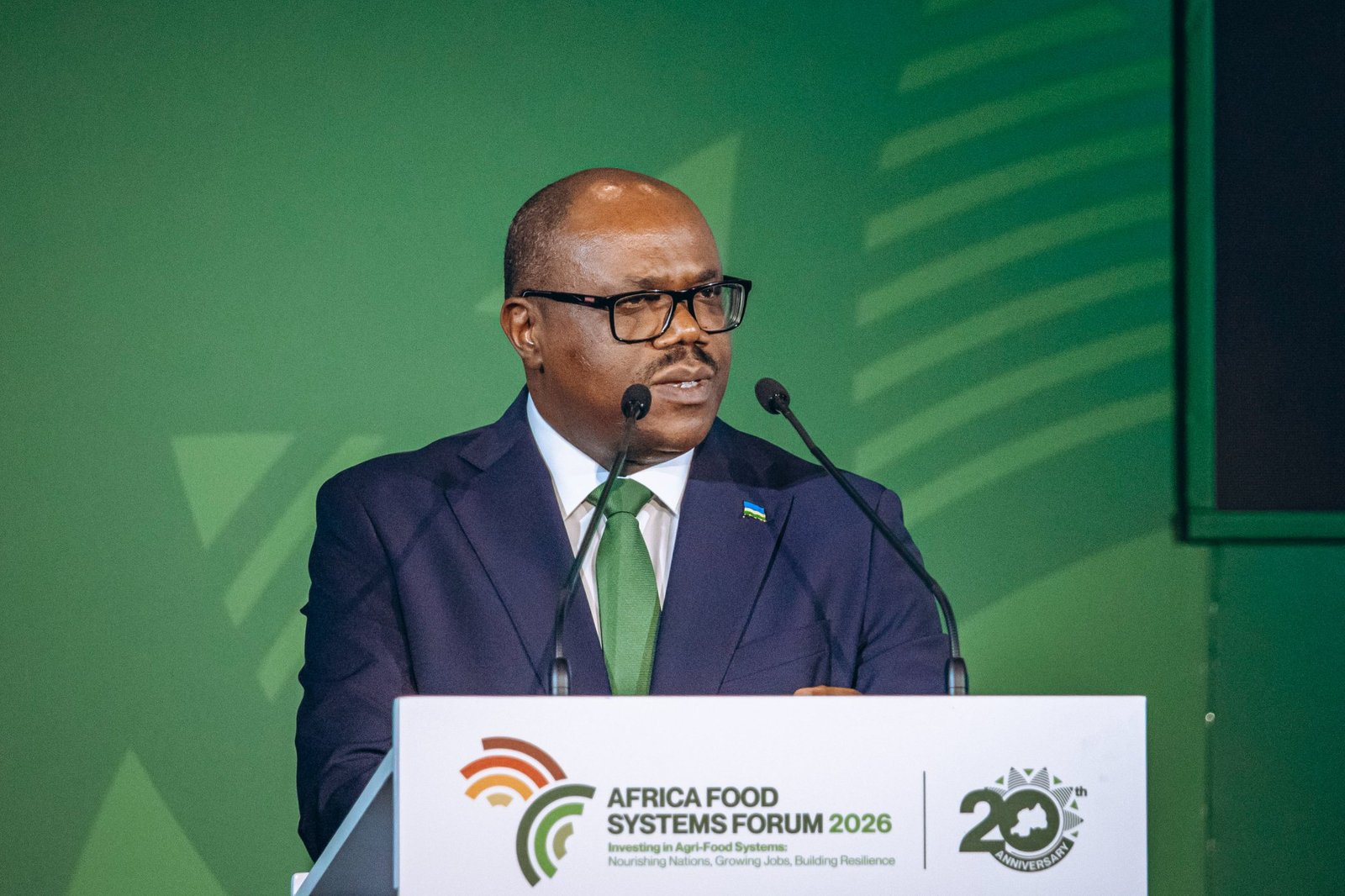
“The task for us is to build credible partnerships that connect capital to these opportunities and ensure that value is shared fairly across the system, especially with smallholder farmers.”
— Justin Nsengiyumva, Rwandan Prime Minister, at the Africa Food Systems Forum 2026
The Changing Landscape of Africa’s Food Systems
Africa stands at a defining moment in its food systems transformation. The continent possesses 60% of the world’s uncultivated land and abundant water resources, yet approximately 307 million people go to bed hungry each day. Africa’s population is projected to reach 2.5 billion by 2050, making the transformation of food systems not just an aspiration but an urgent necessity .
The Africa Food Systems Forum 2026 in Kigali brought together more than 5,000 delegates from over 50 countries, including political leaders, policymakers, researchers, farmers, investors, scientists, and development partners. The message was clear: Africa must move beyond viewing agriculture as a traditional sector and instead position it as a modern and dynamic source of decent employment, entrepreneurship, innovation, and economic opportunity.
How Different Stakeholders Are Driving Change
Development Partners: Catalyzing Investment and Innovation
Development partners are playing a pivotal role in transforming Africa’s food systems by providing financing, technical assistance, and de-risking mechanisms.
IFAD’s Bold Commitment:
At the Africa Food Systems Forum 2026, the International Fund for Agricultural Development (IFAD) announced a $200 million blended finance facility to expand climate adaptation financing for farmers in Rwanda, Kenya, Tanzania, and Uganda. Gérardine Mukeshimana, Vice-President of IFAD, emphasized:
“Public resources must be used strategically to remove constraints, to reduce risk, and to unlock the private sector capital.”
IFAD’s evidence demonstrates that projects with private sector participation generate income gains of over 64%—four times greater than those without private sector involvement. This underscores the critical role of development partners in crowding in private investment.
Key Development Partner Contributions:
The Role of De-Risking:
Development partners are increasingly using blended finance, risk-sharing facilities, and technical assistance to de-risk investments and expand access to credit for rural enterprises, small-scale farmers, and particularly young people and women. This approach is essential for unlocking the private sector capital needed to transform food systems.
Private Sector: The Engine of Transformation
The private sector is being recognized as essential for achieving lasting transformation of African food systems. The Rwanda Climate Smart Agriculture Investment Plan, supported by IFC, identifies $335.4 million in potential private sector investment opportunities in climate-resilient agriculture.
Why Private Sector Engagement Matters:
- Scale and Efficiency: private sector brings capital, technology, and management expertise
- Market Access: Connects smallholder farmers to regional and international markets
- Value Addition: Drives processing, packaging, and product development
- Job Creation: Creates decent employment, particularly for youth and women
Key Private Sector Opportunities in Rwanda:
| Value Chain | Investment Opportunity | IRR |
|---|---|---|
| Tea | USD 92.8M | 20.1% |
| Coffee | USD 45.9M | 22.8% |
| Irish Potato | USD 33.8M | 29.2% |
| Pig & Poultry | USD 169.8M | 27% |
The Role of Financing:
As Mukeshimana noted, IFAD is working with governments and private-sector partners to invest at early stages of food systems, where risks are high but the potential for impact is significant. The Rwanda Climate Smart Agriculture Investment Plan aims to link an estimated 170,200 farmers and 375 companies to climate-smart financing through bankable investments.
Local Farmers: The Heart of the System
Local farmers—particularly smallholder farmers—are at the center of Africa’s food systems transformation. Moses Vilakati, African Union Commissioner for Agriculture, called for greater access to quality seeds, fertilizers, irrigation, mechanization, digital technologies, finance, infrastructure, markets, and extension services for farmers.
Key Challenges Facing Farmers:
- Productivity Trap: Low-yielding seeds, fragmented markets, inadequate water control
- Infrastructure Gap: Weak transport and cold-chain infrastructure, trade barriers
- Finance Gap: Limited access to affordable credit
- Climate Vulnerability: Unpredictable rainfall, prolonged droughts, soil erosion
Empowering Farmers:
The Kampala Declaration sets ambitious targets for 2035: boost agrifood output by 45%, cut post-harvest loss by half, triple intra-African trade, and halve extreme poverty. Achieving these targets requires putting farmers at the center of policy and investment decisions.
“Land is our life, seeds are our future”—Zainab Semgalawe, Chair of African Women Farmers
How Here For Hope Foundation and Earth Focus Network Are Responding
Here For Hope Foundation and Earth Focus Network are actively contributing to the transformation of Rwanda’s food systems through practical, community-based interventions that complement the work of development partners, government, and private sector actors.
1. School Gardens and Food Security
“Food, Water & Trees for 8,000 Students“
In Kayonza District, where drought is a daily crisis and 26.1% of children under five are stunted due to chronic malnutrition, Here For Hope Foundation is transforming 20 schools by planting 5,000 trees, installing 20 rainwater tanks with filters, and creating vegetable gardens for nutritious meals.
| Intervention | Impact |
|---|---|
| Vegetable Gardens | Nutritious meals for 8,000 students |
| Rainwater Tanks | Clean water for drinking and irrigation |
| Trees Planted | Shade, fruit, and carbon sequestration |
| Environmental Clubs | 50 students per school learn sustainable farming. |
| Teacher Training | 40 teachers trained to sustain programs |
Why This Matters:
- School gardens provide hands-on nutrition education
- They create local food supply chains, reducing dependence on imports
- They teach climate-smart agriculture to the next generation
- Students take skills home, creating lasting community change
2. Climate-Smart Agriculture and Restoration
“50,000 Trees for 5,000 Families by 2027“
In drought-prone Kayonza and Gatsibo Districts, where tree cover is only 5.2% and 67% of farmers report decreased rainfall, Here For Hope Foundation is restoring degraded land into productive, climate-resilient farms.
| Intervention | Impact |
|---|---|
| 50,000 Trees | 10 trees per family—avocado, mango, orange, indigenous species |
| Agronomist Training | Ensuring 85%+ survival rates |
| Nursery Jobs | Employment for youth and women |
| Market Linkages | Connecting to NAEB and private exporters |
Alignment with Government Priorities:
This work directly supports Rwanda’s Climate Smart Agriculture Investment Plan, which aims to support about 83,250 hectares of land to become more resilient and productive through efficient water use, higher-yielding crops, and enhanced soil health.
3. Youth and Women in Agri-Entrepreneurship.
“Empower 40 Young Agri-Entrepreneurs in Rwanda“
Rwanda’s youth unemployment is 15.5%, with 25% of young people living in poverty. Women are 79% of farm workers, yet only 8% access formal credit . Here For Hope Foundation’s RE-Build Accelerator is addressing this gap.
| Intervention | Impact |
|---|---|
| 6-Month Accelerator | 20 entrepreneurs per cohort—40 businesses annually |
| Business Skills Training | Business plans, financial statements, investment proposals |
| Website Development | Professional online presence |
| Funding Linkages | Connections to financial institutions |
| Job Creation | 2-5 jobs per graduate—80-200 jobs annually |
Why This Matters:
The accelerator directly addresses the CAADP Kampala Declaration’s commitment to empowering youth and women as central agents of food systems transformation. AGRA and its partners are advancing targeted programs to increase access to finance, land, and skills for these groups.
4. Connecting to Regional and Continental Frameworks
Here For Hope Foundation’s work aligns with key continental frameworks:
🔗 The Power of Partnership: What’s Needed Next
The Africa Food Systems Forum 2026 highlighted that Africa’s major challenge is no longer a lack of policies, strategies, or knowledge, but the failure to translate existing commitments into concrete results. Moses Vilakati, African Union Commissioner for Agriculture, called for stronger investment and private-sector participation to achieve lasting transformation.
Key Recommendations from Stakeholders:
- Strengthen Public-Private Partnerships: Development partners and the private sector must work together to de-risk investments and mobilize capital
- Empower Farmers: Ensure access to quality seeds, fertilizers, irrigation, mechanization, digital technologies, finance, infrastructure, markets, and extension services
- Invest in Youth and Women: Targeted programs to increase access to finance, land, and skills
- Scale Proven Models: Such as Here For Hope Foundation’s school gardens, tree planting, and agri-entrepreneurship programs
- Integrate Nutrition: As AGRA and GAIN’s partnership emphasizes, agricultural growth must translate into healthier diets for all Africans
A Call to Action: Join the Transformation
Here For Hope Foundation and Earth Focus Network are seeking partners to scale our work:
How to Partner:
- Join Earth Focus Network to connect with organizations like Here For Hope Foundation and others
- 📧 Contact Here For Hope Foundation to explore partnerships and collaboration
- 🌍 Invest in Rwanda’s agri-food future
This article was developed by Earth Focus Network News to share the vision for Africa’s food systems transformation and Here For Hope Foundation’s contribution to that vision. We thank all partners—development partners, the private sector, the government, and local farmers—for their commitment to building a food-secure, resilient, and prosperous Africa.
🌍 Will you join us in transforming Africa’s food systems? Let’s build a food-secure future together! 🌱