
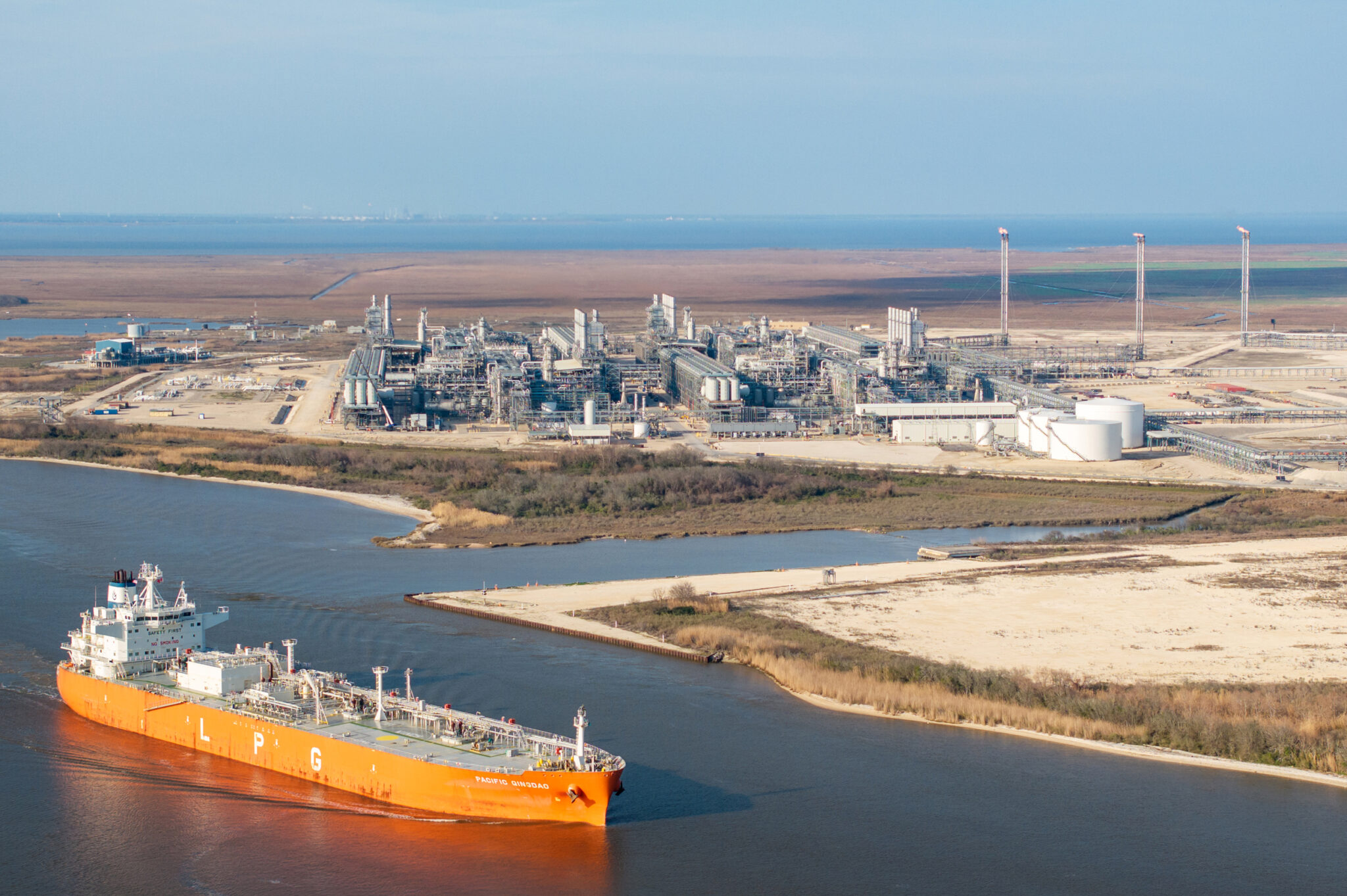
Seven Democratic lawmakers are probing whether the country’s largest liquefied natural gas exporter received a massive tax break it never should have qualified for.
A $370 million tax payout. A 1,000-foot-long industrial tanker. And a law written for small motorboats.
That’s the unlikely combination at the center of a new Senate investigation into a massive IRS payment to Cheniere Energy, the nation’s largest exporter of liquefied natural gas (LNG).
Seven Democratic senators, including Senate Minority Leader Chuck Schumer and Elizabeth Warren, are demanding answers about why the IRS gave Cheniere a retroactive “alternative fuel” tax credit for using LNG to power its own export vessels.
The problem? Shipping experts say LNG is the standard fuel for these ships—not an alternative. And the law was written for motorboats under 65 feet long. LNG tankers are typically 1,000 feet.
“We write to clarify whether the Internal Revenue Service has determined that companies using liquefied natural gas for propelling LNG tankers qualify for credits under the Alternative Fuel Excise Tax,” the senators wrote to IRS Acting Commissioner Scott Bessent.
“Providing tankers with AFET credits would unnecessarily waste taxpayer money while doing nothing to protect the environment, reduce costs for everyday Americans, or lessen the United States’ dependence on oil.”
A Credit Meant for Motorboats, Not Industrial Ships
Let’s rewind.
President George W. Bush signed the Alternative Fuel Excise Tax (AFET) credit into law in 2005. Its goal was simple: incentivize the use of fuels other than gasoline and diesel in motor vehicles or motorboats.
Federal shipping regulations define “motorboat” as vessels no more than 65 feet in length.
An LNG tanker is roughly 15 times that size.
“There’s a significant difference between a tugboat and a supertanker,” said Kirsten Sinclair Rosselot, an environmental performance analyst who studied LNG vessel emissions. “This is the standard fuel they use, and it’s been the standard from the very beginning.”
LNG carriers have a unique quirk: they constantly “boil off,” or evaporate, a small amount of their cargo to keep the rest cold. That boiled-off gas has to go somewhere. Most commonly, it’s burned as fuel for the ship itself.
In other words, Cheniere wasn’t making a green choice. It was using the fuel it had to use anyway—and then getting paid for it.
“Qualifying LNG tankers for the AFET credit would allow companies to claim a tax credit for an activity they would have done regardless, on vessels that seemingly should not have qualified,” the senators wrote.
The Timeline: A Private Meeting, a Large Donation, Then a Payout
Cheniere announced its $370 million retroactive payment in February. The credit expired in 2024, but the company successfully argued it should apply to prior years.
How did that happen?
William Henck, a former IRS tax attorney, offered a blunt assessment: “It doesn’t matter what the regulations are. If they get inside access to the top decision makers, it’ll go down any way they want.”
Consider the timing:
- April 2024: Cheniere CEO Jack Fusco attended a private meeting at Mar-a-Lago, where then-candidate Donald Trump encouraged oil and gas executives to donate $1 billion to his campaign. Trump reportedly said the money would more than pay for itself in saved taxes and reduced regulations.
- Two months later: Fusco donated nearly $500,000 to a Trump-affiliated PAC and the Republican National Committee, according to FEC data.
- February 2025: Cheniere announced it had received the $370 million IRS payout.
Cheniere spokesperson Bernardo Fallas defended the payment, saying in a statement that “Cheniere’s pursuit of alternative fuel credits spans multiple administrations, both Democratic and Republican, culminating in IRS approval following a detailed and multi-year review by career IRS personnel.”
The IRS and the White House did not respond to requests for comment.
What Happens Next?
The senators have given Bessent 45 days to respond to a list of detailed questions, including:
- Has the IRS determined that LNG tankers qualify as “motorboats”?
- Did Bessent or his staff communicate about the credit with any affected party or anyone in the White House—including President Trump?
- What was the total amount of AFET credits paid to LNG exporters?
Friends of the Earth, an environmental group that has tracked Cheniere’s tax credit claim, filed a public records request with the IRS on March 30.
Raena Garcia, a senior energy campaigner for the group, said Bessent and the IRS might dismiss the senators’ letter. But if they do, she added, “they could be subpoenaed by Congress next year, depending on the outcome of the midterm elections.”
For now, the $370 million question remains unanswered: Why did American taxpayers just hand a massive check to one of the country’s largest fossil fuel exporters—for doing exactly what it would have done anyway?
Key Takeaways
- What happened: Cheniere Energy received a $370 million retroactive tax credit from the IRS for using LNG to fuel its own export tankers.
- Why it’s controversial: The credit was intended for alternative fuels in motor vehicles and small motorboats (under 65 feet). LNG is the standard fuel for these massive 1,000-foot vessels.
- The political angle: Cheniere’s CEO attended a Mar-a-Lago meeting where Trump solicited $1 billion from oil executives, then donated nearly $500,000 to Trump-affiliated groups. The payout came months later.
- What’s next: Seven Democratic senators are investigating. The IRS has 45 days to respond. A public records request has also been filed.