California wants to ban PFAS pesticides by 2035. However, millions of pounds of these toxic chemicals continue to spray directly on the fruits and vegetables you feed your family.
You’ve probably heard of PFAS—the so-called “forever chemicals” that make raincoats waterproof, nonstick pans slick, and fast-food wrappers grease-resistant. They’ve been linked to cancer, thyroid disease, infertility, liver damage, and immune system harm.
But here’s something most people don’t realize: PFAS are also in pesticides. And they’re being sprayed directly onto America’s produce.
“It’s appalling,” says California Assemblymember Nick Schultz, who introduced AB 1603—a bill to ban the use, sale, and manufacture of PFAS pesticides in the state starting in 2035. “It’s there because they were directly sprayed onto our crops and onto our fields.”
If you care about what lands on your family’s dinner plate, this matters. California is the nation’s breadbasket. What grows there ends up in grocery stores across the entire country.
The Shocking Numbers: Millions of Pounds, Thousands of Applications.
Between 2018 and 2023, more than 2.5 million pounds of pesticides containing PFAS were sprayed on California crops, according to an analysis by the Environmental Working Group (EWG).
In Monterey County’s Salinas Valley—where UC Berkeley researchers have long studied pesticide impacts on farmworker communities—over 500,000 pounds were applied. That’s more than 1,000 separate applications.
And the problem isn’t just on the farm. EWG detected PFAS pesticide residues on nearly 40% of conventional produce grown in California. Washing might help with dirt and bacteria, but these chemicals are designed to repel water. A quick rinse may do very little.
The Worst Offenders: Strawberries, Peaches, and a Fungicide Called Fludioxonil
One PFAS pesticide in particular stands out: fludioxonil, a fungicide sprayed after harvest to prevent mold and mildew on produce.
Because it’s applied post-harvest, there’s no rain to wash it off. It just sits there. On your fruit.
Laboratory tests have shown that fludioxonil can kill human cells and damage DNA. The European Food Safety Authority considers it an endocrine disruptor that harms animal reproductive systems. Yet in the U.S., it’s still widely used.
How widely?
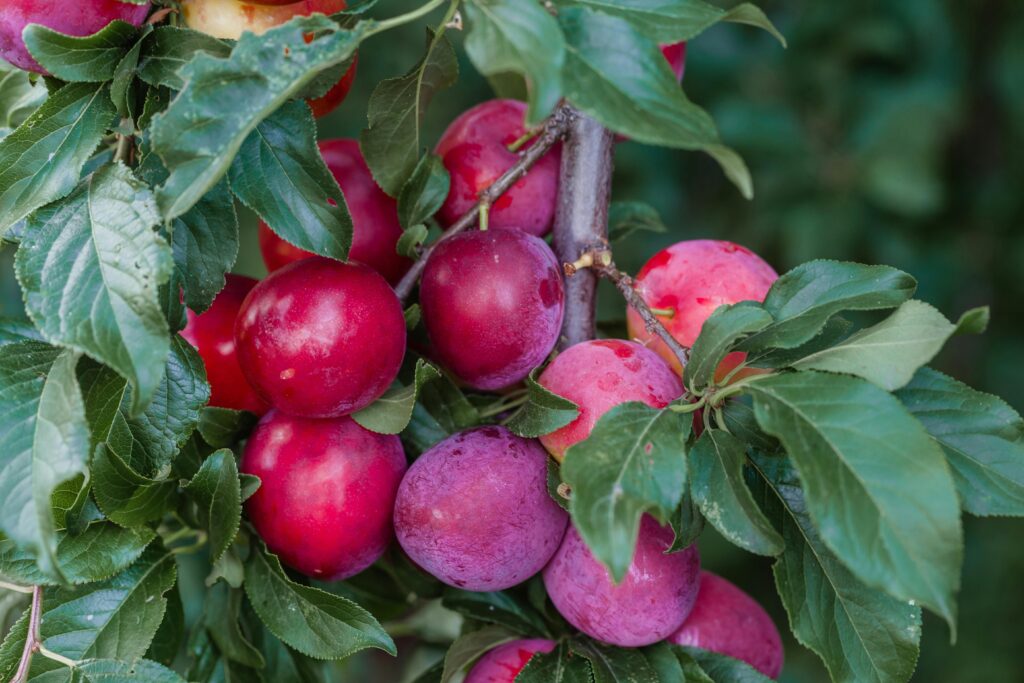
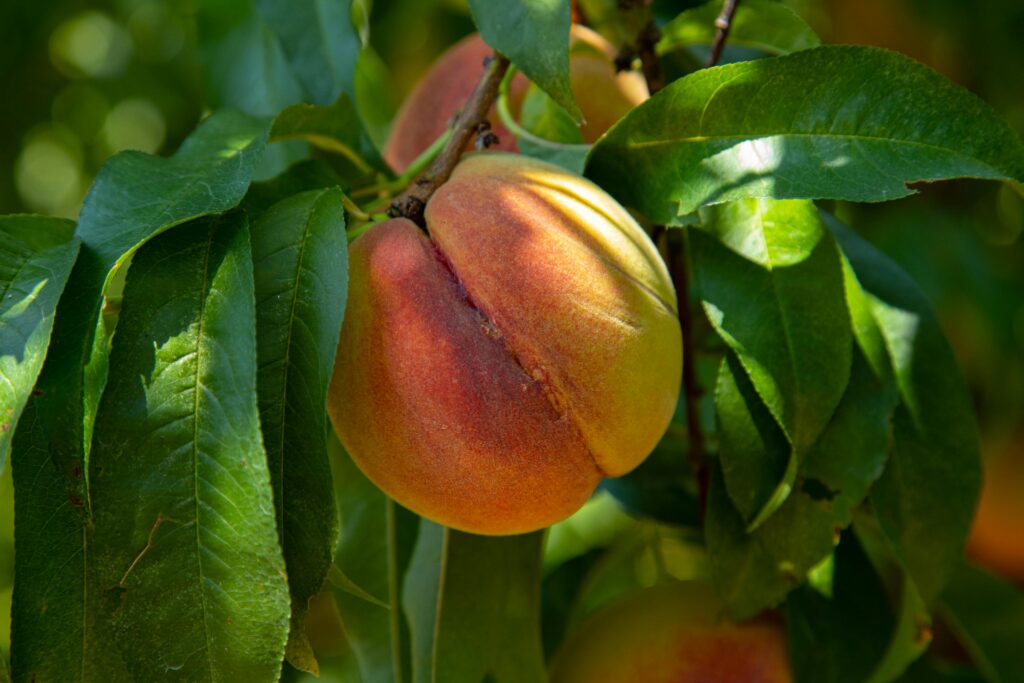
- Found on 90% of tested nectarines, peaches, and plums
- Highest levels on lemons (over 1 part per million)
- Also common on pears, blueberries, and apricots
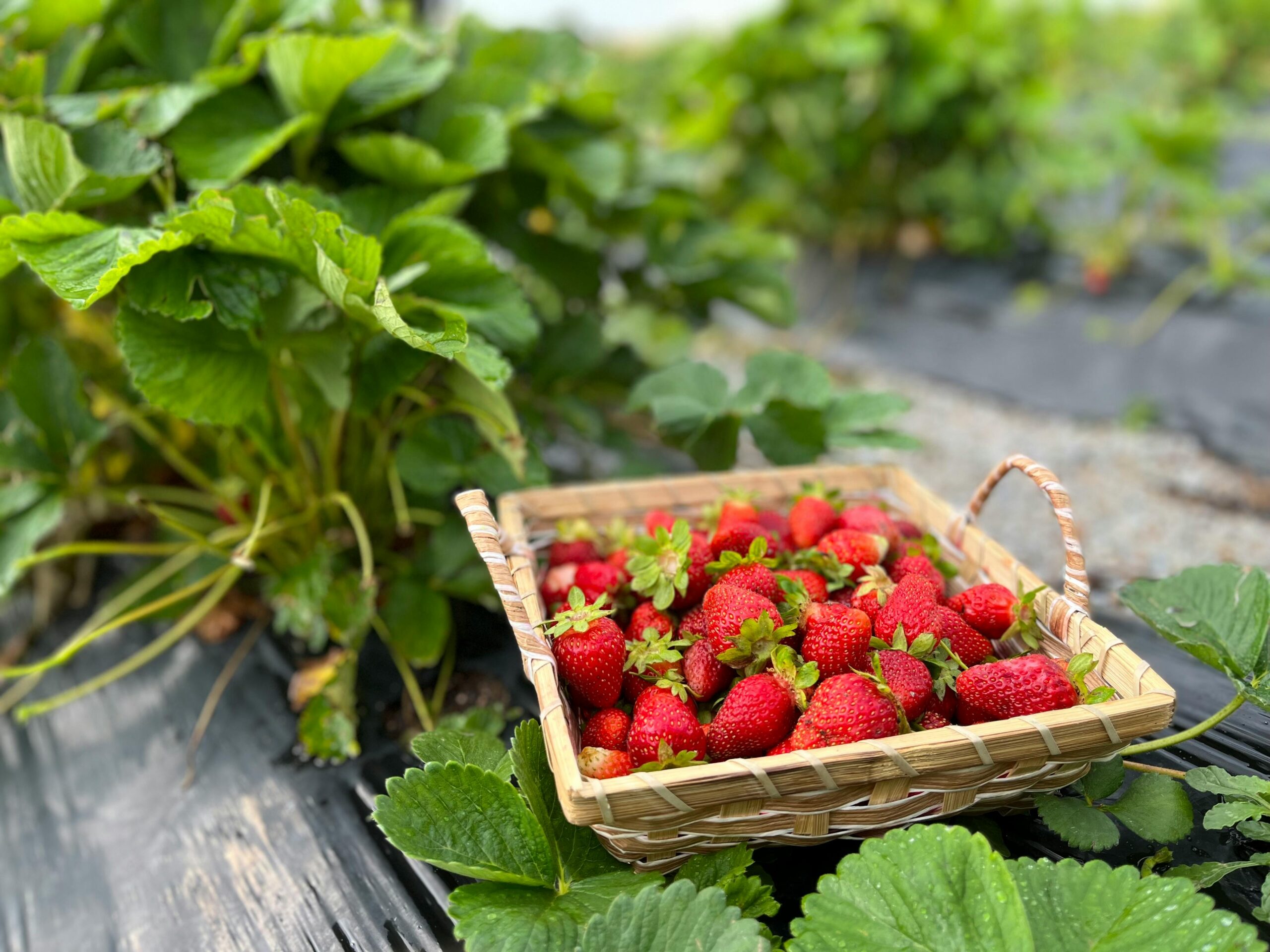
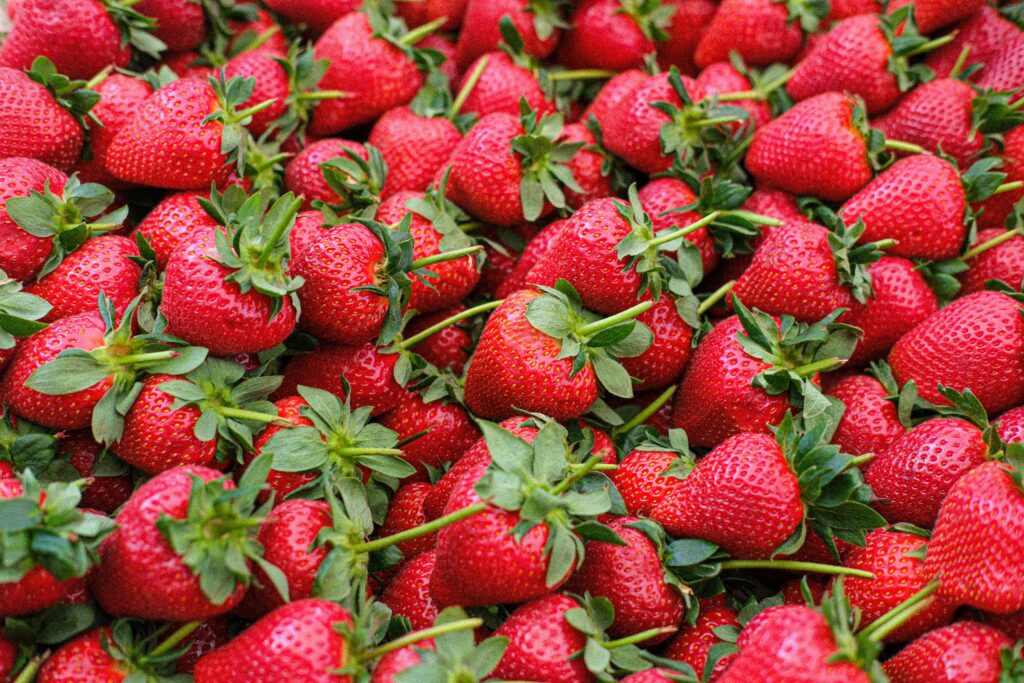
And fludioxonil is just one player. EWG’s 2023 testing data revealed 17 different PFAS pesticides on nonorganic produce. Strawberries alone contained 10 different forever chemicals. Cherries and peaches had seven. Grapes, celery, and collards had six. Spinach had five.
The “Cocktail Effect”: Why One Plus One Equals Three.
Here’s where it gets even more concerning.
“What we know about pesticides and PFAS is that the sum is often greater than its parts,” says Varun Subramaniam, a science analyst at EWG. “Being exposed to a cocktail of pesticides is often a lot more dangerous than being exposed to each of them individually.”
But the EPA doesn’t test for that. The agency evaluates pesticides one at a time, comparing benefits (more crops) against risks (health harms). It does not look at what happens when a child eats 10 different PFAS residues every day for 20 years.
“That’s a big question mark,” says Nathan Donley of the Center for Biological Diversity. “Because no one knows, not even EPA, since these complex mixtures have never been tested before.”
A Regulatory Loophole: The EPA and the OECD Don’t Agree
You might assume that if a chemical is a PFAS, the EPA treats it like one. Not exactly.
The OECD (Organization for Economic Co-operation and Development), which the U.S. helped found, defines PFAS to include single-fluorinated carbon pesticides. The European Union uses this definition. Nearly half of U.S. states do too.
But the EPA does not.
“OECD is not a regulatory body and has no purview here whatsoever,” an EPA spokesperson told CNN. The agency insists its narrower definition is rooted in “gold standard science.”
The result? The Trump administration approved two PFAS pesticides for use on lettuce, oranges, tomatoes, almonds, peas, and oats. It’s considered a third for corn, soybeans, and wheat. And in late February, the EPA announced it’s considering an emergency exemption without safety review for a PFAS pesticide on rice.
Meanwhile, the pesticide industry is “doubling down” on PFAS, Donley says. “At a time when most industries are transitioning away from PFAS, the pesticide industry is doubling down. We’re definitely moving in the wrong direction.”
Then There’s TFA: The Forever Chemical That Lasts Centuries
When PFAS pesticides break down, they can turn into trifluoroacetic acid (TFA)—a chemical with an aqueous half-life of several hundred years. Carbon tetrafluoride, another breakdown product, has an atmospheric half-life of 50,000 years.
TFA is already “increasing irreversibly” in soil, drinking water, and plants around the world. It’s been found in human blood. Animal studies link it to liver damage and reproductive toxicity. A 2024 review concluded that TFA concentrations are now “orders of magnitude higher” than other PFAS and are becoming a threat to the entire planet.
Yet little research has been done on its human health effects. And the EPA’s narrow definition means TFA and similar compounds aren’t even regulated as PFAS.
What Can You Do? (Because Waiting Until 2035 Isn’t an Option)
California’s AB 1603 wouldn’t take effect until 2035. That’s a decade away. In the meantime, PFAS pesticides are still being sprayed. So what can you do today?
1. Buy organic when you can.
Organic produce contains fewer synthetic pesticides, including PFAS. It’s not a perfect guarantee, but it’s a meaningful step.
2. Wash your produce—thoroughly.
Even though PFAS are water-resistant, washing still helps remove surface residues, dirt, and bacteria.
- Rinse under running water (warmer than the produce is best).
- Use a brush on firm items like carrots, potatoes, and cucumbers.
- Wash before peeling so you don’t transfer contaminants from the knife to the flesh.
- Remove outer leaves of cabbage and lettuce; rinse each leaf gently.
- Dry with a clean cloth or paper towel.
3. Don’t use soap, bleach, or produce washes.
Fruits and vegetables are porous and can absorb these chemicals. Plain water is all the FDA recommends.
4. Know which produce is most contaminated.
If you’re prioritizing where to buy organic, focus on:
- Strawberries (10 different PFAS pesticides)
- Peaches & nectarines (90% tested positive for fludioxonil)
- Cherries & plums
- Grapes, celery, collards, spinach
5. Triple-washed bagged greens are fine as-is.
The FDA says they don’t need another wash (though a quick rinse doesn’t hurt).
The Bottom Line: A Problem Most People Don’t Know Exists
“These are the foods that actually give us nutrition and what we feed our children,” Donley says. “So this is the last place you’d want to see that type of contamination. And I think most people don’t have a clue this is happening.”
California’s bill is a start. The EU has already banned some PFAS pesticides. But until the U.S. closes the regulatory gap—and until the EPA starts testing chemical cocktails instead of single ingredients—the burden falls on you.
Wash your produce. Buy organic when you can. And pay attention. It’s important to remember that chemicals should not be a permanent fixture on your dinner plate.