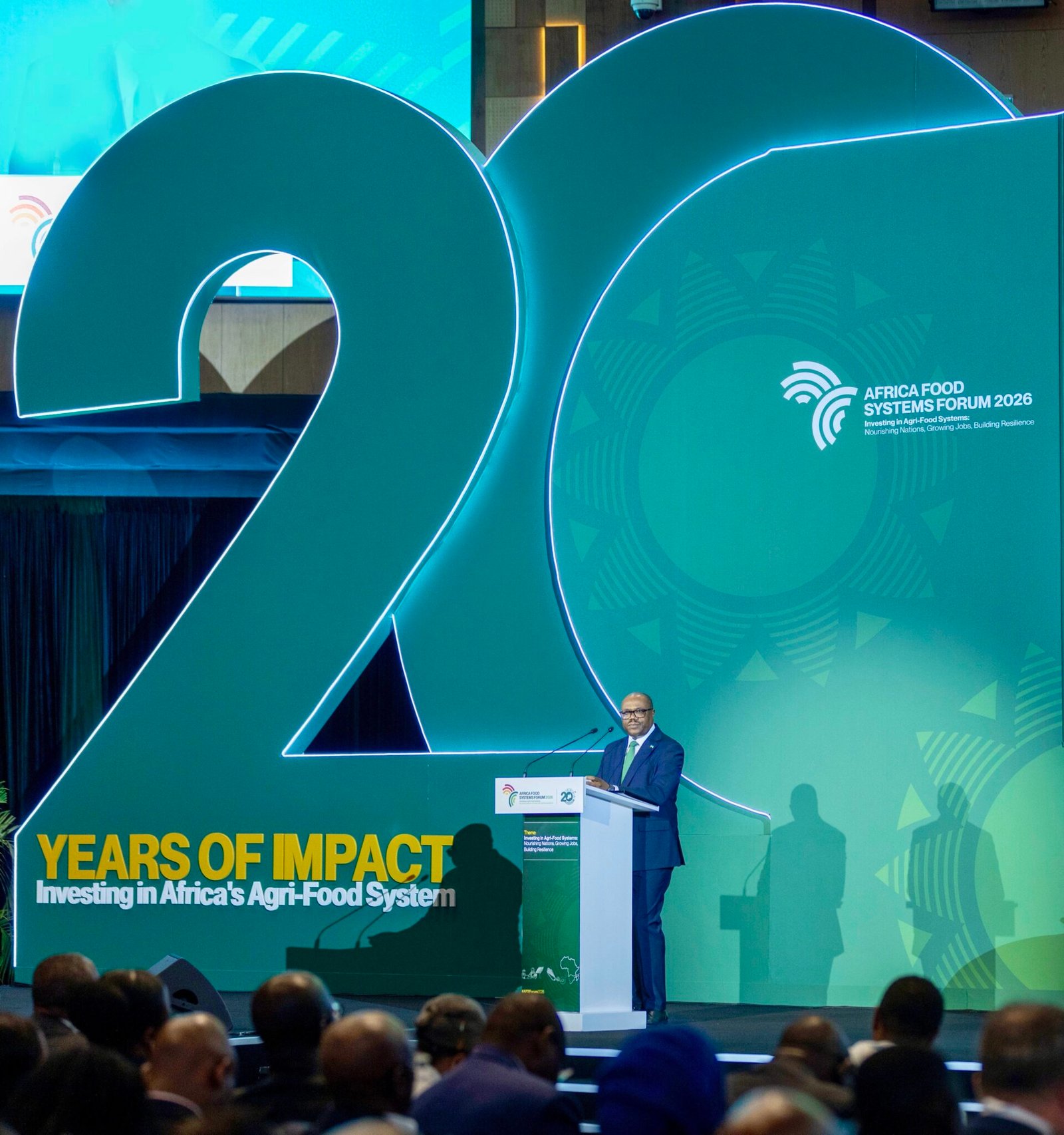
Kigali, Rwanda – The Africa Food Systems Forum 2026 officially opened on Monday, 31 August 2026, at the Kigali Convention Centre, bringing together over 5,000 delegates from across the continent and beyond. Under the theme “Investing in Agri-Food Systems: Nourishing Nations, Growing Jobs, Building Resilience,” the forum marks a historic double milestone: 20 years since the founding vision of AGRA and 20 years of the Africa Food Systems Forum as the continent’s premier agricultural convening platform.
A Historic Moment for Africa’s Food Systems
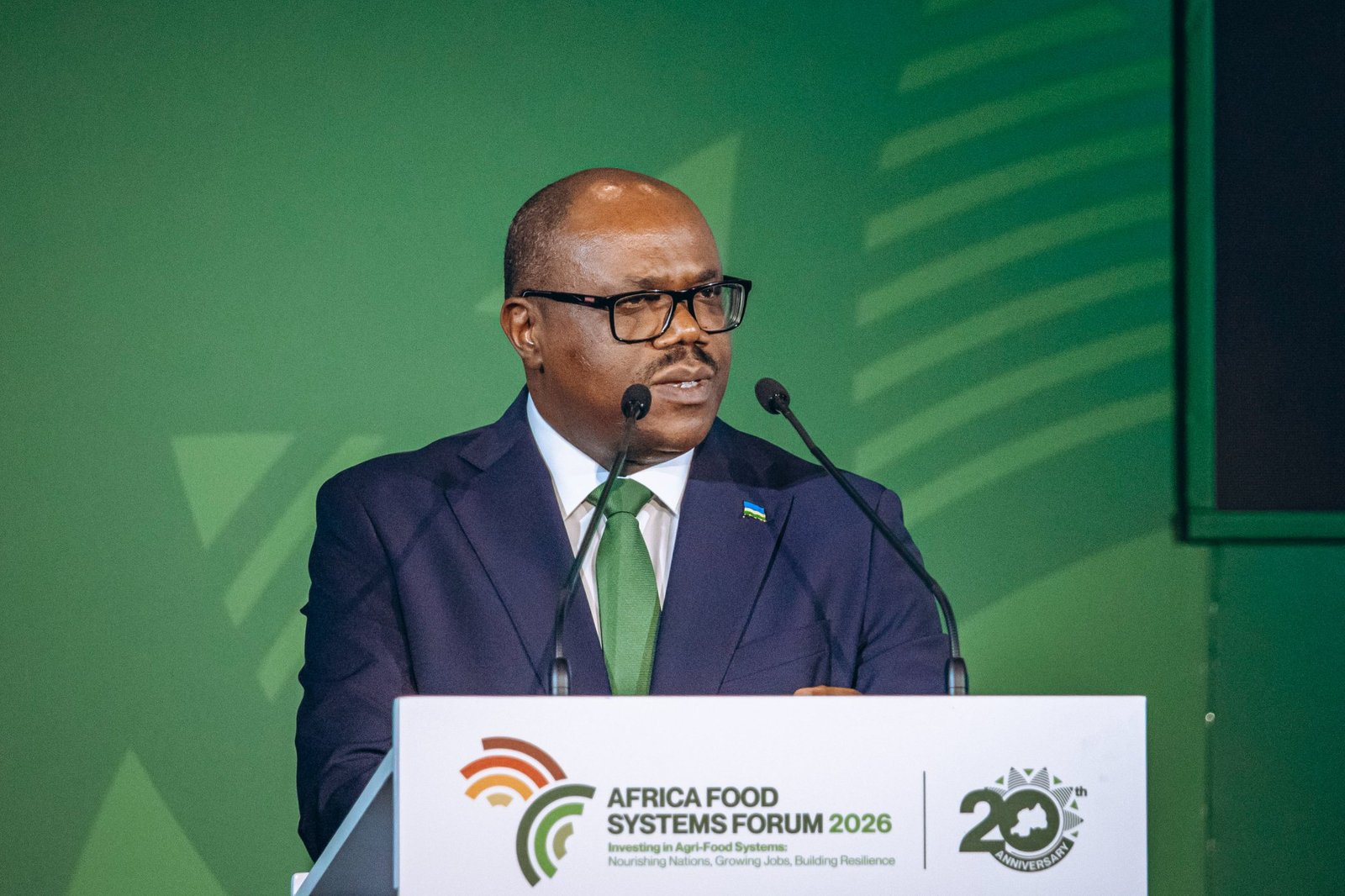
Speaking at the opening ceremony, His Excellency Hailemariam Desalegn, Chair of the AGRA Board and former Prime Minister of Ethiopia, reflected on the journey since the forum’s inception:
“20 years ago, our journey was born from a simple yet radical conviction that Africa’s smallholder farmers were not a welfare problem to be managed but an economic powerhouse to be unleashed.”
He reminded delegates that the founding vision, articulated by the late Kofi Annan, was “never simply about producing more metric tons of grain. It was about human dignity. It was about building nations that could feed themselves, create meaningful employment for their youth, foster domestic industries, protect their natural and biocapital, and stand sovereign and self-confident on the global stage.”
Progress Made, but Challenges Remain
The forum launched the Africa Food System Foresight Report 2026, documenting real progress across focus countries where AGRA and its partners have operated over two decades:
| Metric | 2000s | Recent |
|---|---|---|
| Average smallholder farmer income | ~$640 | ~$1,215 |
| Average cereal yield growth | 1–1.2% annually | 2.3% annually |
| National seed systems | Virtually non-existent | Producing hundreds of locally adapted varieties |
However, Desalegn cautioned, “Progress is not the same as prosperity. A farmer who doubles her maize yield but sees her crop rot in the field due to lack of storage is not prosperous. A young graduate who invents an agricultural technology but cannot secure capital to scale is not empowered.”
Three Interlocking Structural Traps
The Foresight Report identifies three traps holding back Africa’s agricultural transformation:
| Trap | Description |
|---|---|
| The Productivity Trap | Smallholders remain caught in depleted soil health, inadequate water control, low-yielding seed stock, and escalating climate hazards. |
| The Value Trap | Even when farmers break the productivity barrier, markets fail them—fragmented aggregation, high post-harvest losses, deficient logistics, and non-tariff barriers prevent capturing economic margins. |
| The Capability Trap | Ambitious strategies fail because public institutions, operational budgets, cross-ministerial coordination, and delivery mechanisms cannot sustain momentum. |
“To break these traps, we must draw inspiration from the powerful proof points emerging across our own continent. The outliers prove that a decade of focused commitment can transform a sector.”
Proof Points Across Africa
Desalegn highlighted success stories demonstrating what is possible:
- Rwanda – Disciplined institutions, performance-based public administration, and focused state execution
- Ethiopia – Lowland and highland wheat initiative turning the country from a structural importer to a self-sufficient producer and exporter
- Côte d’Ivoire – Cashew processing drive transitioning from commodity exports towards domestic value addition
- Malawi – Commercial soya bean processing clusters connecting smallholder aggregators to industrial processors
- Nigeria – Private sector and smallholders coming together in outgrower schemes equivalent to 50,000 farmers with one investor
These success stories confirm that transformation takes root when five conditions converge: capable state institutions, patient domestic and international capital, alignment behind national investment pathways, an empowered private sector, and delivery systems accountable to smallholder farmers.
A Call for Implementation
His Excellency Moses Vilakati, Commissioner for Agriculture, Rural Development, Blue Economy, and Sustainable Environment at the African Union Commission, delivered a candid message:
“Africa today does not suffer from shortages of policies, nor strategies, nor declarations and frameworks, or even commitments. The challenge before us is implementation. The question is no longer what needs to be done. The question is whether we have the political will, the investment, the partnerships, and the accountability mechanisms required to implement what we have already agreed upon.”
He challenged delegates to confront an uncomfortable reality:
“Every year Africa spends billions of dollars importing food. Yet we have the capacity. Yet we have the knowledge. Yet we have the human resources to produce ourselves. This growing food import bill represents jobs that are exported abroad, opportunities lost for African youth, and precious foreign exchange diverted from investments in our economies.”
Africa must move from being a net importer of food to becoming a global competitive producer, processor, and exporter of agricultural products.
Rwanda’s Commitment and Questions for the Forum
Right Honourable Dr. Édouard Ngirente, Prime Minister of Rwanda, opened the forum with a call for partnerships and implementation:
“The opportunity is before us. The need is urgent and the time to act is now.”
He posed three critical questions for the forum:
- How do we turn our commitments into credible and investable plans? – Clear priorities, realistic financing, strong institutions, and measurable targets
- How do we ensure that investment strengthens entire food systems rather than isolated parts? – A productive farm cannot thrive without roads, energy, irrigation, storage, finance, logistics, processing, and reliable markets
- How do we take what works to scale across Africa? – No shortage of promising innovations and successful pilots—the challenge is to finance, adapt, and deploy these solutions across countries and communities
Investment Commitments Announced
Dr. Alvaro Lario, President of IFAD, announced new financing facilities:
- $200 million blended facility with Equity Bank, NDF, Finland, and GCF to expand climate adaptation financing for farmers in Kenya, Tanzania, Rwanda, and Uganda
- $10 million facility to support the growth of African small agribusinesses
- $2 million blended finance for farmers’ organizations with the Bank of Kigali and IFAD
He emphasized, “Public finance alone cannot deliver the transformation that this continent needs. Public resources must be used strategically to remove constraints, to reduce risks, and to unlock private sector capital.”
Youth: The Key to Africa’s Agricultural Future
A panel discussion highlighted the critical role of youth in agricultural transformation. When asked about the low youth participation in the forum, Dr. Agnes Kalibata noted:
“There are more youth than this. We are seeing a lot of innovation coming from the youth every day. What it tells us is we need to remove the barriers that they face in order to really develop—whether that’s access to finance, access to technology, or entrepreneurship.”
The Way Forward: A Decade of Implementation
His Excellency Hailemariam Desalegn concluded:
“Our objective is not to manage every moving part indefinitely. AGRA’s highest success is to serve as a diagnostic partner and catalyst—identifying binding constraints, mobilizing technical and financial resources, and validating scalable operational models.”
The forum will feature high-level ministerial roundtables, side events on financing for climate adaptation, youth and women’s participation, technology in agriculture, and the AFS Youth Assembly dedicated to young leaders in agrifood systems.
Earth Focus Network: Supporting Food Systems Transformation
At Earth Focus Network, we believe that food systems transformation is a collective movement. We connect organizations, businesses, and individuals working on sustainable agriculture, climate resilience, and food security with opportunities, partnerships, and resources.
Join our network to access funding opportunities, connect with like-minded changemakers, and build partnerships that drive impact.
🌐 Visit us: www.earthfocusnetwork.com
📧 Email us: Info@earthfocusnetwork.com
Support Our Mission Through GlobalGiving
Your contribution helps us plant 10,000,000 trees in Rwanda by 2030, restore degraded land, and support sustainable agriculture.
👉 Donate via GlobalGiving: DONATE NOW
Quick Reference
| Detail | Information |
|---|---|
| Event | Africa Food Systems Forum 2026 |
| Theme | “Investing in Agri-Food Systems: Nourishing Nations, Growing Jobs, Building Resilience” |
| Dates | 31 August – 4 September 2026 |
| Venue | Kigali Convention Centre, Rwanda |
| Delegates | 5,000+ |
| Milestone | 20 years of AGRA and the Forum |
| Key Reports | Africa Food System Foresight Report 2026 |
| Investments | $200M+ announced |
Earth Focus Network believes the future is not something we wait for—it’s something we build together. Join us in building Africa’s food future!