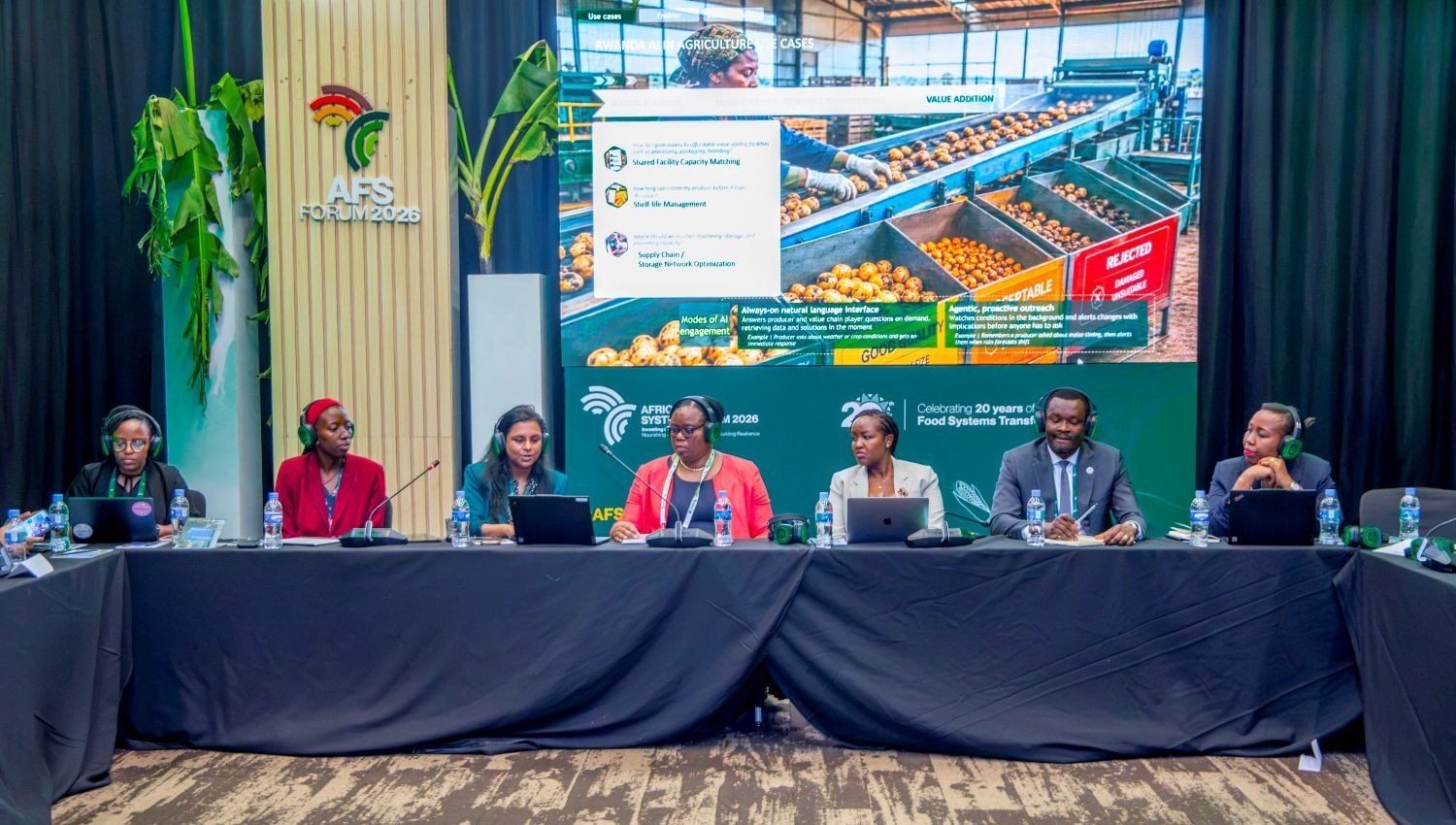
Kigali, Rwanda – Rwanda is looking to use artificial intelligence to make farming more productive, with early testing of AI-powered crop planning and fertilizer advisory tools pointing to potential yield gains of about 20 percent. The emerging technology push is part of a wider government effort to use AI to extend agricultural expertise to millions of farmers, improve the timing and accuracy of farming decisions, and address some of the constraints limiting productivity.
A Strategic Vision for AI in Agriculture
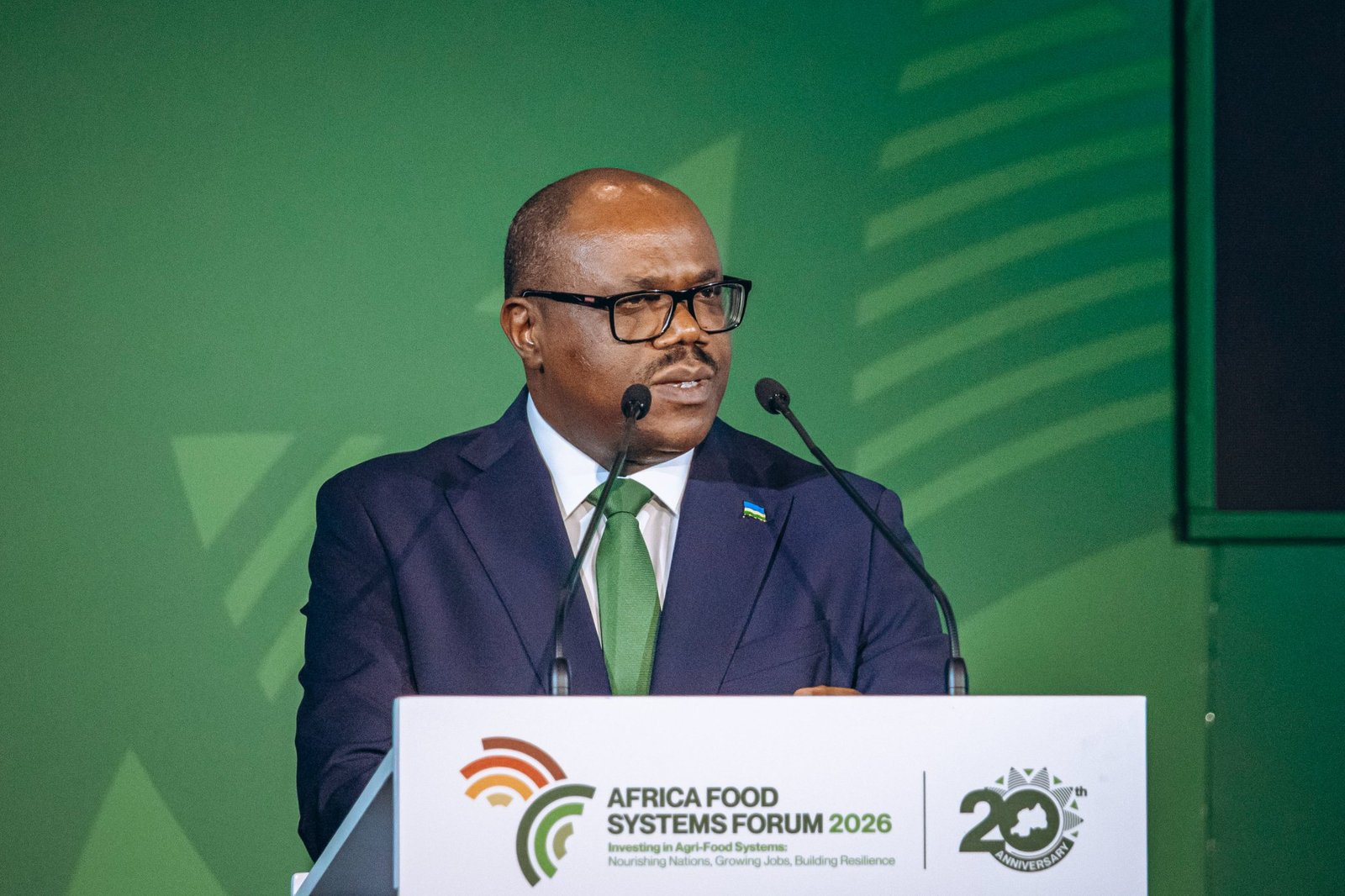
Speaking at the Africa Food Systems Forum 2026, ICT Minister Paula Ingabire emphasized that agriculture presents both a major opportunity and an urgent need for AI, given the sector’s importance to employment across sub-Saharan Africa. Nearly half of employment in sub-Saharan Africa is in agriculture, yet millions of farmers continue to make some of the most consequential economic decisions of their lives—what to plant, when to plant, how much fertilizer to apply, whether the crop is diseased, when to harvest, and where to sell—with too little information or often getting information too late in the process.
“It’s not about replacing a farmer. It’s not about replacing agronomists. It’s really about putting better intelligence in the hands of both farmers and agronomists.” – Paula Ingabire
The minister stressed that AI should not be viewed as a replacement for farmers or agricultural experts but as a tool to put better intelligence in their hands. Imagine if a farmer could have access to an agronomist, a weather expert, or even a financial expert at any time, in a language they understand. That is the potential AI holds for the farmer ecosystem across Africa.
Real-World Success Stories Across Africa
Across the continent, promising applications are already demonstrating the potential of AI in agriculture:
In Kenya: Plant Village’s Nuru allows farmers to use a smartphone to take a picture of a cassava leaf and identify whether the plant has been affected by a disease. CGIAR research found that the technology could diagnose cassava disease symptoms more accurately than farmers and agriculture extension agents.
In Zambia: Apollo is tackling financial exclusion by combining data from remote sensing, satellite imagery, and machine learning models to connect farmers to inputs, financing, and advice.
These innovations point towards a fundamentally different agricultural system in which every farmer can make better decisions, every extension officer can reach more farmers, financial institutions can better understand agricultural risks, and markets become more transparent.
Rwanda’s Journey: Building the Foundations for AI
Rwanda did not start with AI—it started with the foundations that make AI useful. Almost a decade ago, Rwanda launched the e-Soko platform, shifting from manually collecting market prices from over 30 markets to making these prices easily available on mobile phones.
Then came Smart Nkunganire, digitizing the agro-input subsidy value chain. Today, more than 1.5 million farmers are registered on this platform, ordering subsidized seeds and fertilizers through a simple USSD transaction.
These systems collectively have created something much more valuable: a growing digital footprint of Rwanda’s agricultural economy. Alongside this, Rwanda has invested in connectivity, digital identity systems, and digital public infrastructure. Now, the country is looking at what AI can do to extract much greater value from these foundations.
The Tunga Voice Assistant: A Local Language Solution
One example of this approach is Tunga, an AI-powered voice assistant being tested through the agriculture ministry’s call center. Tunga allows farmers to ask questions in Kinyarwanda and provides responses based on a validated agricultural knowledge base developed by MINAGRI, the Rwanda Agriculture and Animal Resources Development Board (RAB), and partners.
During the testing phase, Ingabire said Tunga was able to correctly address at least 60 percent of the questions it received, while questions it could not confidently answer could be escalated to a human expert.
“AI cannot speak the language that our farmers understand—it will never transform agriculture.” – Paula Ingabire
Developing AI systems that work in local languages and through channels accessible to farmers will be critical to achieving scale. Ingabire noted that a “brilliant model that requires an expensive smartphone and continuous broadband will not solve the problem for many of our farmers,” emphasizing the importance of solutions that can work through voice, basic phones, extension agents, and existing agricultural platforms.
Four Priority Areas for AI in Agriculture
Ingabire outlined four priority areas where Rwanda is applying AI in agriculture:
| Priority Area | Description |
|---|---|
| 1. Farmer Advisory | Providing personalized, timely advice in local languages |
| 2. Crop & Livestock Intelligence | Earlier detection of pests, diseases, and agricultural risks |
| 3. Markets & Finance | Connecting farmers to buyers, improving access to prices, credit, and insurance |
| 4. Government Intelligence | Helping authorities better understand production, anticipate shocks, and target subsidies |
Rwanda’s Ambitious Extension Coverage Goal
Rwanda aims to increase agricultural extension coverage from 35 percent in 2023 to 69 percent by 2029, a target that would enable the country to reach more than 2.5 million farmers. However, expanding the number of agricultural extension officers alone will not be enough to close the gap—making technology an important multiplier.
“This is where technology will become an enabling or multiplier factor in ensuring that we can reach more farmers with fewer extension officers.” – Paula Ingabire
The Challenge: Moving from Pilots to Scale
The minister said Rwanda’s challenge is no longer demonstrating that AI can be used in agriculture but taking successful applications beyond small-scale pilots.
“Africa has no shortage of pilots. What we need is patient multi-year financing to take solutions that are working for 10,000 farmers to millions of farmers.” – Paula Ingabire
She also called for investment in agricultural data, African-language datasets, and locally validated AI models. Farmers in Africa grow crops poorly represented in global datasets and speak languages underrepresented in AI systems. The World Bank has identified around 60 potential AI applications across agrifood systems, from climate-resilient seed research to pest detection, precision agriculture, logistics, and price forecasting.
The Five Asks for Partners
Rwanda’s leadership made five clear asks for partners:
1. Invest in Agriculture Data Foundations
AI needs reliable local data on soil, weather, crops, livestock, markets, and satellite imagery. Interoperable agriculture data infrastructure—backed by appropriate data governance frameworks—will allow innovators to build responsibly.
2. Invest in the African Context
African farmers grow crops poorly represented in global datasets and speak languages underrepresented in AI systems. The continent needs African language datasets, agriculture knowledge bases, and locally validated models that can be treated as digital public goods.
3. Finance the Last Mile
Solutions must work through voice, basic phones, extension agents, existing agricultural platforms, and offline where possible. Technology must adapt to the farmer, not the other way around.
4. Move from Pilots to Scale
Africa has no shortage of pilots. What is needed is patient, multi-year financing to take solutions from 10,000 farmers to millions of farmers. This means financing integration with government systems, product development, compute capacity, farmer onboarding, and local support.
5. Invest in African Capability
Investments should build capability alongside technology—through agronomists, data scientists, extension officers, farmers, researchers, policymakers, and local technology companies. This is how sustainability is created in the long run.
AI Sovereignty and Strategic Autonomy
Ingabire said Rwanda’s approach to AI sovereignty is focused on maintaining strategic autonomy and avoiding irreversible dependence on external players while continuing to encourage innovation. The country is also seeking to coordinate investment in computing infrastructure across sectors rather than having agriculture, healthcare, education, and other sectors develop separate requirements for computing power and GPUs.
Meeting Rwanda’s 2050 Food Production Ambitions
Minister of State for Agriculture and Animal Resources Dr. Solange Uwituze said AI would be necessary if Rwanda is to meet its long-term food production ambitions. Rwanda’s Vision 2050 targets feeding a population of roughly 23 million people on the country’s existing land area, requiring major increases in production.
“We need to do things differently. We need to multiply 15 times our current production levels, and we need to adopt vertical agriculture.” – Dr. Solange Uwituze
She pointed to precision agriculture, farmer cooperative management, irrigation, post-harvest handling, and market linkages as areas where AI could support the transformation. Rwanda is also using food basket sites, where farmers are organized around larger land-use areas and provided with inputs, extension services, irrigation, post-harvest facilities, and market and financial linkages.
Soil Profiling and Tailored Fertilizer Recommendations
Uwituze noted that Rwanda has completed soil profiling to identify nutrient deficiencies in different locations and is moving away from a one-size-fits-all approach to fertilizer application. Through cooperation with Morocco, Rwanda has begun developing tailored fertilizer recommendations based on local soil conditions.
The Way Forward: An Invitation to Build Together
“This roundtable is not another invitation to fund another set of disconnected pilots. It’s really an invitation to build an AI-enabled agriculture system that is scalable, starting with Rwanda.” – Paula Ingabire
Rwanda has the beginnings of the digital infrastructure required, defined priority use cases, government institutions prepared to integrate solutions, and a country small enough to move quickly but representative enough to be a proof of concept.
The proposition is straightforward:
- Pick a part of the system and build it with us
- Help build the data foundation
- Help build the intelligence layer
- Help take solutions to farmers
- Help rigorously measure outcomes
- Help develop models that will travel beyond Rwanda
Measuring Success
The measure of success will not be how sophisticated AI becomes, but rather:
- Whether the farmer is able to plant at the right time
- Whether they plant the right crop
- Whether they have the right inputs required
- Whether they can detect disease before losing their crop
- Whether they can get credit from a financial institution that previously could not see them
- Whether they get a fair price for their harvest
Earth Focus Network: Supporting Agricultural Transformation
At Earth Focus Network, we believe that technology and collaboration are essential to transforming Africa’s agricultural systems. We connect organizations, businesses, and individuals working on sustainable agriculture, climate resilience, and food security with opportunities, partnerships, and resources.
Join Our Network
- 🤝 Connect with like-minded changemakers
- 💰 Access funding opportunities for sustainable agriculture
- 📢 Share your work with a global audience
- 🌱 Support restoration—we’re planting 10,000,000 trees in Rwanda by 2030
🌐 Visit us: www.earthfocusnetwork.com
📧 Email us: Info@earthfocusnetwork.com
Support Our Mission Through GlobalGiving
Your contribution helps us plant trees, restore degraded land, and support sustainable agriculture in Rwanda.
👉 Donate via GlobalGiving: HERE
Earth Focus Network believes the future is not something we wait for—it’s something we build together. Join us in building Africa’s agricultural future!