
About.
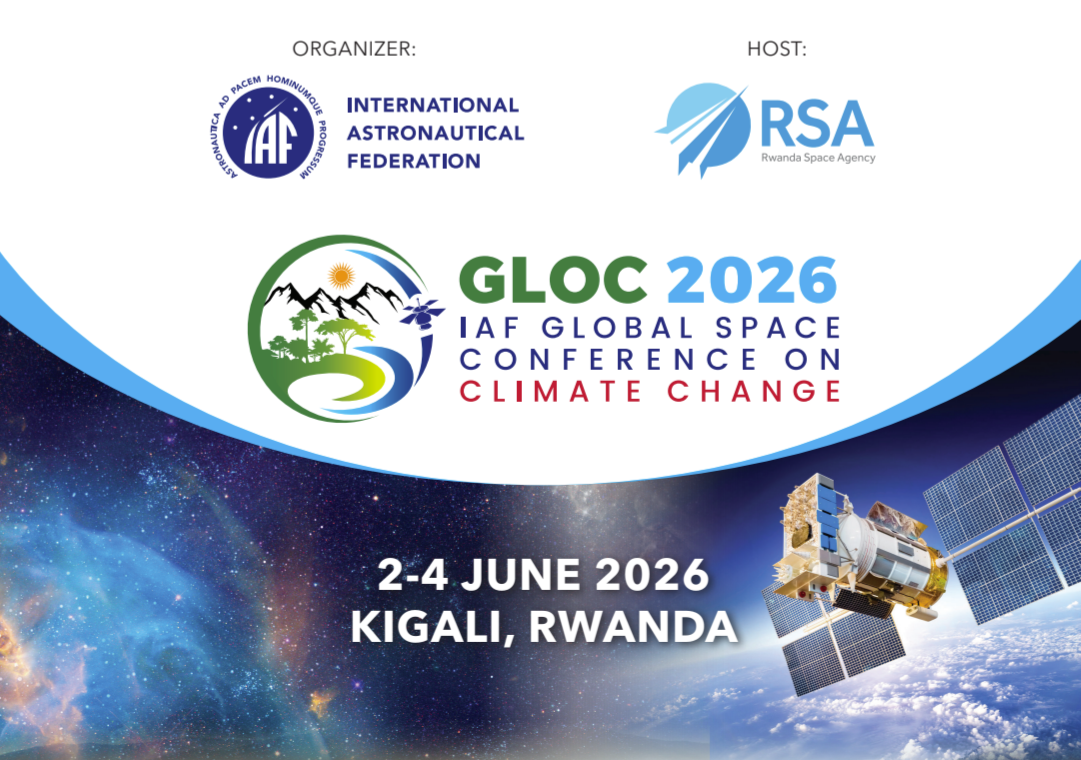
Date: June 2–4, 2026
Location: Kigali, Rwanda
Host: Rwanda Space Agency (RSA) & International Astronautical Federation (IAF)
Focus: Space technology, climate monitoring, greenhouse gas detection, disaster management.
Wait – space and climate change? How do they connect?
You might be thinking, “I’m not an astronaut. Why should I care about a space conference?”
Fair question.
But here’s the thing, we can’t fix what we can’t see. And right now, there are giant gaps in how we track climate change. Melting glaciers? We have rough estimates. Methane leaks? Often spotted months later. Deforestation? Occasionally we only know after satellite images get around to it.
GLOC 2026 exists to close those gaps.
This isn’t a sci-fi convention. It’s a working summit where space agencies, climate scientists, and policy people sit in the same room and ask one question: How do we use satellites to protect this planet faster?
What makes this year different?
Three things.
First, it’s in Africa. Most space conferences happen in Europe or North America. Holding GLOC in Kigali matters because African nations face some of the worst climate impacts with the fewest monitoring tools. This shifts the conversation from theory to real need.
Second, the topic list isn’t vague. We’re talking.
- Greenhouse gas monitoring (not just CO₂ – methane and nitrous oxide too)
- Disaster and emergency management (floods, droughts, landslides)
- Geospatial intelligence (AI + satellite data for farming, water, and urban planning)
Third, the Rwanda Space Agency is co-hosting. And they’re not messing around. They’ve already received 319 abstracts from 59 countries. That’s serious academic and technical firepower.
Who’s this actually for?
Let me be direct.
You should attend if you:
- Work in climate policy and need better data to make decisions
- Run an agriculture or food security program that depends on weather forecasting or land monitoring
- Build AI or remote sensing tools for environmental applications
- Represent a space agency looking for African partnerships
- Are a student or researcher in geospatial science (yes, there’s space for you too)
If your job touches satellite data – even just using Google Earth Engine once a week – this conference will level you up.
Why Kigali again?
Rwanda keeps popping up on these lists for a reason.
The country has invested heavily in its space program not because it plans to launch rockets, but because it understands that climate resilience starts with information. The Rwanda Space Agency is young, hungry, and actually getting things done.
Plus, Kigali is clean, safe, and surprisingly easy to navigate. No visa hassles for most Africans. Decent internet. Good coffee.
Small things. But they matter when you’re traveling for a conference.
A quick reality check
This is a technical conference. Don’t come expecting high-level political speeches and networking cocktails every night.
You’ll see slide decks full of spectral bands, orbital mechanics, and regression models. That’s the point. GLOC is for people who want to build climate solutions, not just talk about them.
That said, the field trips and side events are excellent. Past attendees have described them as “where the real learning happens.”
Practical advice
- Book your accommodation early. Kigali fills up fast during conference season.
- Bring a notebook. Not a laptop. You’ll want to sketch diagrams and jot down acronyms you’ve never heard before.
- Don’t be afraid to ask “dumb questions.” Space people love explaining their work. Seriously. They’ll engage you in a lengthy conversation.
Bottom line
GLOC 2026 isn’t flashy. It won’t have red carpets or celebrity speakers.
But if you care about using real data to fight climate change and you want to meet the people who actually collect that data from orbit, these are June’s most valuable three days.
Register here
Download the brochure here: herehttps://opportunities.spaceinafrica.com/wp-content/uploads/2025/08/GLOC2026_Brochure.pdf