By Feston Bigirimana, Founder, Here For Hope Foundation
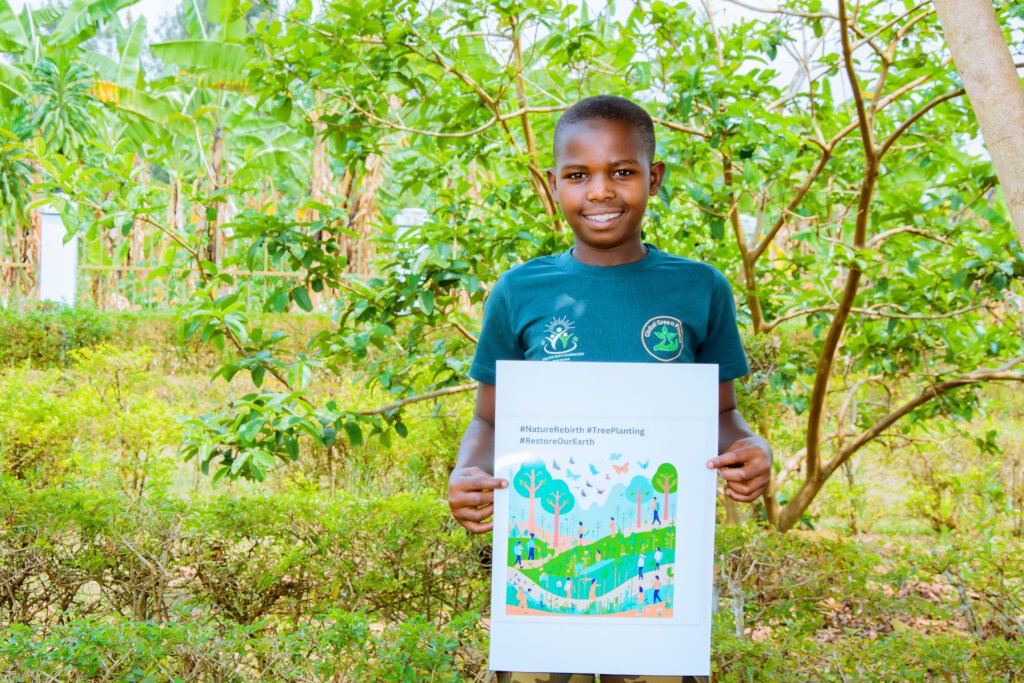
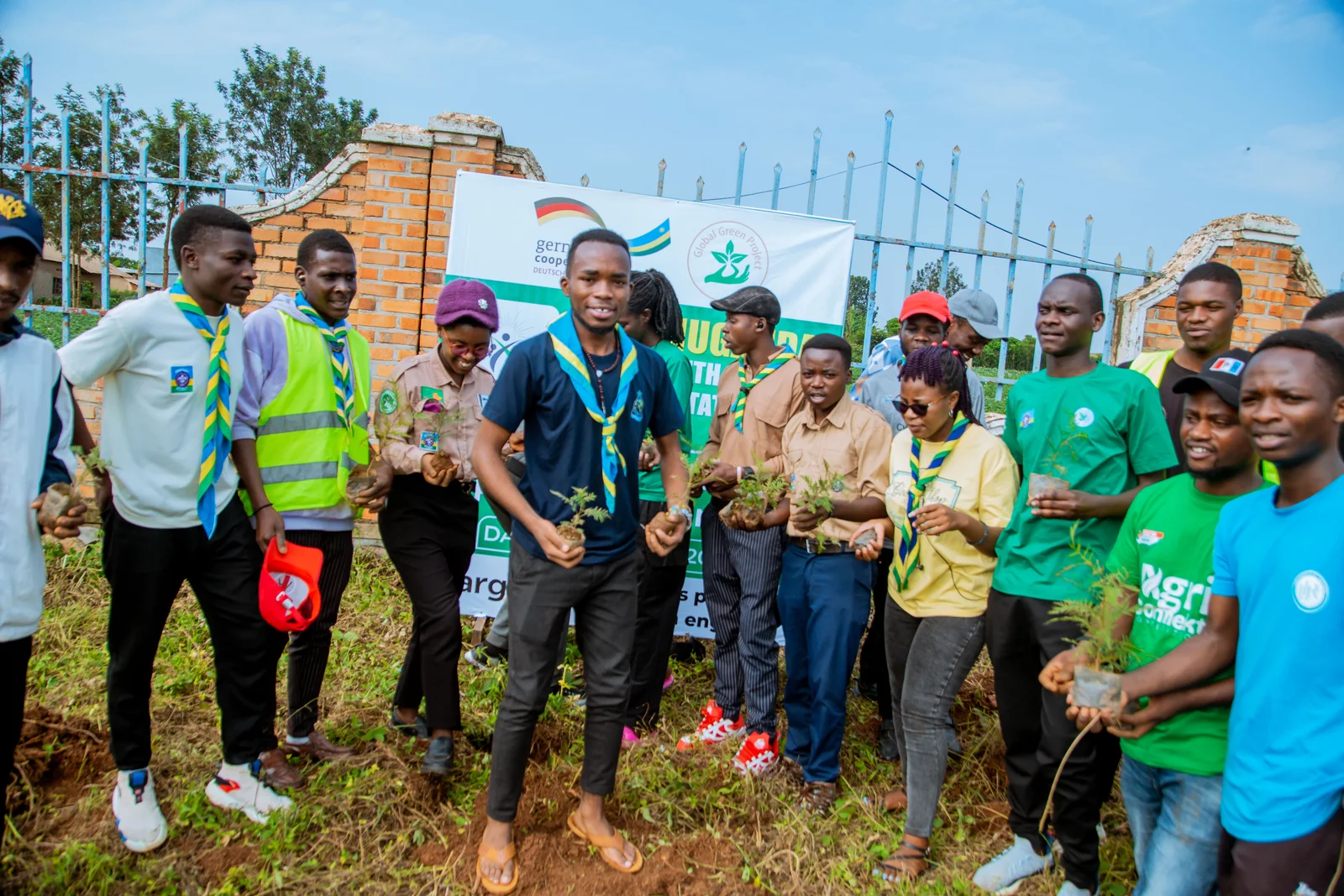
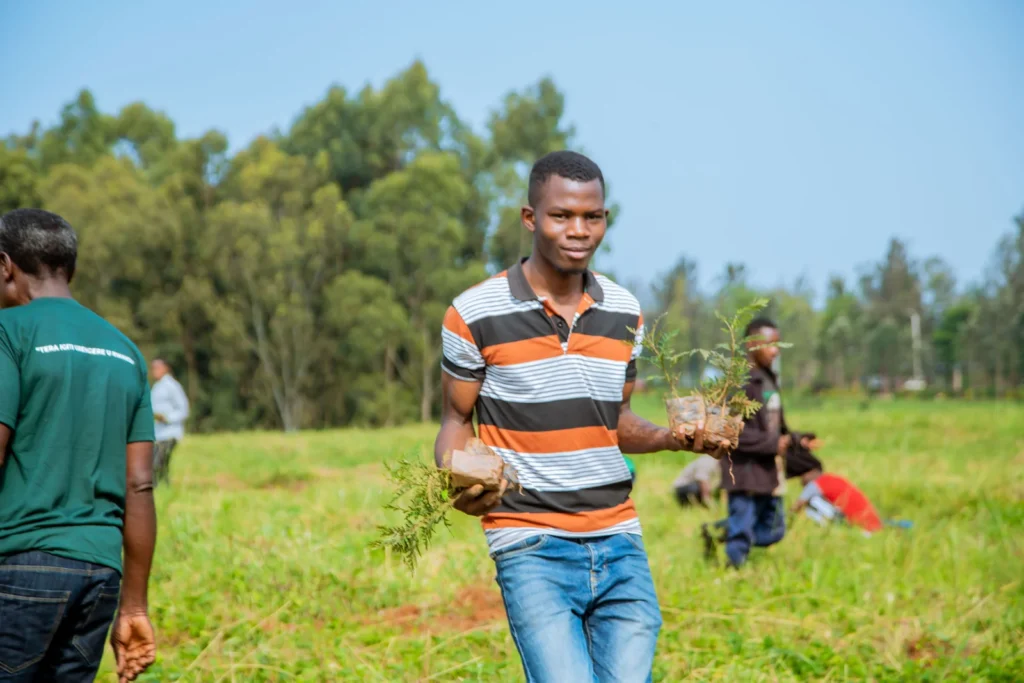
“Igiti Cyange, Umurage Wange.” In Kinyarwanda, these words carry the weight of a generation’s responsibility. When we launched the “My Tree, My Legacy” campaign at the University of Rwanda’s Rukara Campus, we were not simply planting 6,800 trees. We were responding to a climate crisis that is reshaping Eastern Rwanda with alarming speed—and investing in the one group most capable of reversing it: young people.
This partnership, made possible through the generous support of German Cooperation in Rwanda and the guidance of Kayonza District authorities, represents a deliberate, strategic intervention in a region that climate scientists have identified as Rwanda’s most vulnerable to environmental collapse.
The Climate Reality: Why Kayonza Demands Urgent Action.
Kayonza District is not merely another part of Rwanda facing environmental challenges. It is ground zero for climate vulnerability in the country.
Rwanda’s vulnerability to climate change has worsened significantly. According to the Rwanda Environment Management Authority (REMA), the national climate resilience score deteriorated from 0.3 in 2018 to 0.5 in 2025—a clear indicator that extreme weather events are outpacing adaptation efforts. The Eastern Province now ranks as the country’s most vulnerable region, with a resilience score of 0.54 compared to the national average.
Kayonza stands at the epicenter of this crisis. REMA’s climate vulnerability assessment identifies Kayonza as having the highest overall impact score in the Eastern Province, with exposure, sensitivity, and vulnerability levels equal to or exceeding neighboring districts. Approximately 75% of Kayonza’s total area is highly susceptible to drought, with the remaining 25% classified as very highly susceptible.
The data paints a sobering picture:
The Eastern Province remains the only region in Rwanda where deforestation has historically outpaced afforestation. Between 2009 and 2019, approximately 65,807 hectares of forest were lost—9% more than the area replanted. In Kayonza specifically, the Ndego Sector lost 51% of its shrub and forest cover, while afforestation accounted for just 1%.
Climate Trends: A Region in Transformation
Beyond the statistics, the climatic shifts affecting Kayonza are profound and accelerating.
A comprehensive study analyzing meteorological data from 1981 to 2021 reveals alarming trends:
- Temperature Rise: Annual minimum temperatures increased by 2.95°C, with the June-August season experiencing the greatest rise of 3.37°C. Mean temperatures rose by 1.87°C regionally.
- Rainfall Declines: During the March-May rainy season, 39 out of 56 meteorological stations recorded declining rainfall trends. The September-December season also showed decreases at 31 stations.
- Drought Intensification: Since 2010, drought frequency, duration, and severity have intensified significantly.
- Perception Alignment: 85% of surveyed farmers acknowledge climate change, with 54% observing rising temperatures and 40% noting decreased rainfall—perceptions that align closely with meteorological data.
Critically, the study found that farmers in the region attribute climate change primarily to deforestation—a finding that validates our tree-planting mission and underscores the urgency of landscape restoration.
Why Youth? The University as a Climate Action Hub
Given the scale of the crisis, why focus on university students? The answer lies in three critical factors.
1. Youth Are the Most Impacted—and Most Motivated
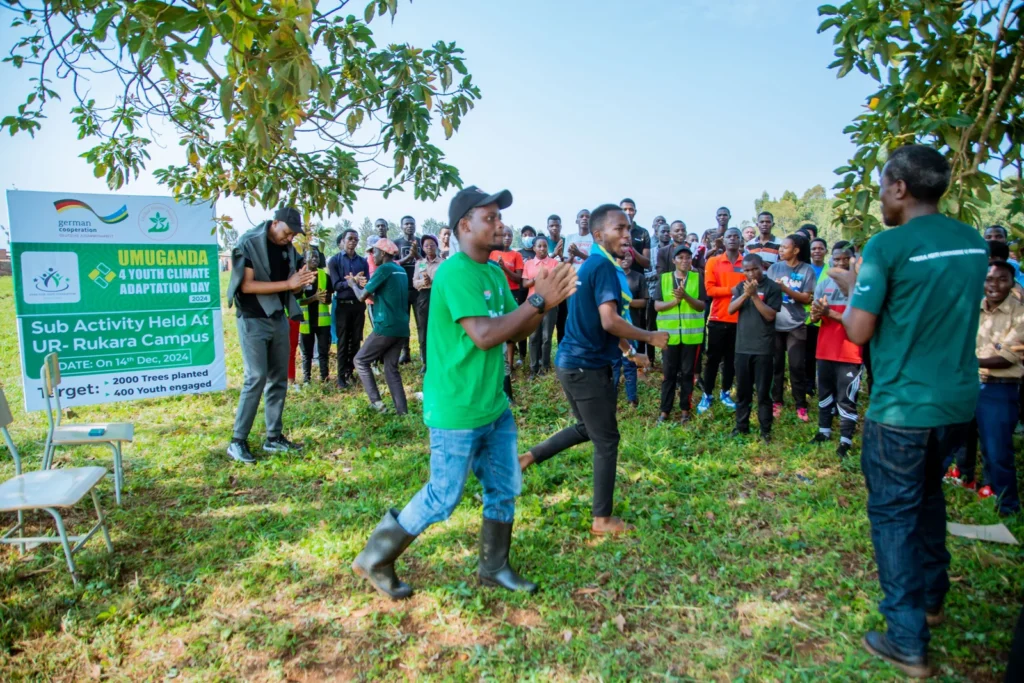
Young people in Rwanda are inheriting a rapidly deteriorating environment. Ineza Umuhoza Grace, a Rwandan climate advocate and University of Rwanda graduate, describes how witnessing climate displacement as a child drove her to study Water and environmental engineering at UR. Her experience is not unique.
Across Rwanda’s universities, students are demanding action. In 2026, over 740 student teams from the University of Rwanda—representing more than 3,000 applicants—competed for entrepreneurship funding focused on climate change mitigation, agricultural technology, and environmental protection. Fifty-two student-led start-ups each secured $5,000 in funding to turn their innovations into reality.
The momentum is undeniable. The Mastercard Foundation Scholars Program, a 10-year partnership with the University of Rwanda, has shown that students between 19 and 24 are at the ideal stage to learn teamwork, develop solutions, and drive impact. As one UR official noted, “Some have already started earning from their startups while still being good students. It is possible to run a business and still pursue education.”
2. Universities Bridge Theory and Practice
Environmental education in Rwanda has long remained confined to lecture halls—discussed but not lived. The UR-Rukara Campus partnership changes that.
By integrating hands-on tree planting with academic life, we transform students from passive learners into active environmental stewards. This experiential education model produces graduates who carry sustainable practices into their careers, creating a multiplier effect that extends far beyond campus boundaries.
3. Young Leaders Drive Systemic Change.
The “My Tree, My Legacy” campaign assigns personal ownership of trees to individual students. This simple mechanism—each student responsible for “their” tree—creates accountability and long-term commitment. Early survival rates have been remarkable.
As the Loss and Damage Youth Coalition, which now involves over 1,000 young people from more than 100 countries, has demonstrated, youth-led action can catalyze change. Ineza Umuhoza Grace describes her engagement with the Rwandan government as “an equal partnership”—a model that other nations should emulate.
Why This Partnership Matters: German Cooperation and Kayonza District
The German Cooperation Commitment
The partnership with German Cooperation in Rwanda represents a strategic alignment of resources and expertise. In October 2025, Germany extended an €18 million grant (approximately Frw 30.5 billion) to strengthen Rwanda’s social protection system, channeled through the Local Administrative Entities Development Agency (LODA).
Ambassador Heike Uta Dettmann underscored the significance of this partnership, stating: “Rwanda has shown that investing in its population leads to a meaningful reduction in poverty. Social protection has an immediate impact on the most vulnerable.”
This commitment extends to environmental restoration. The “My Tree, My Legacy” campaign aligns with Germany’s broader support for Rwanda’s resilience-building efforts, addressing the intersection of environmental degradation and community vulnerability.
Kayonza District’s Strategic Guidance
The district authorities of Kayonza have been instrumental in guiding this initiative. Their deep understanding of local challenges, from semi-arid climate conditions to the specific needs of farming communities, ensured that this project was grounded in reality.
Kayonza’s 2023-2050 land use plan prioritizes planting indigenous tree species adapted to local conditions and afforestation on approximately 4,000 hectares. The district has recognized that the 93.1% of residents relying on firewood for cooking represents both a vulnerability and an opportunity—one that tree-planting campaigns can directly address.
The National and Global Context
Rwanda has set ambitious targets: restoring 2 million hectares of degraded and deforested land by 2030, planting more than 300 million trees by 2029, and allocating 65 million trees in 2024/2025 to the ten districts with the lowest forest cover, including Kayonza.
The Green Climate Fund has invested $33.8 million in the Transforming the Eastern Province through Adaptation project, targeting the restoration of 60,000 hectares of drought-degraded landscapes. So far, 43,777 hectares—about 73% of the target—have been restored, with agroforestry accounting for 83% of the restored area.
The “My Tree, My Legacy” campaign directly supports these national goals while contributing to multiple UN Sustainable Development Goals: SDG 4 (Quality Education), SDG 13 (Climate Action), and SDG 15 (Life on Land).
The Economic Imperative
Climate change carries a heavy economic cost for Rwanda. Natural disaster-related losses generate annual expenditures of approximately $300 million, making climate change one of the country’s primary development challenges.
In Kayonza alone, drought has repeatedly devastated livelihoods. The 2016 drought damaged 16,119 hectares of crops in the district. Dry spells continued into 2025, with more than 23,000 families requiring food assistance.
By investing in restoration today, we are not merely planting trees. We are protecting farmers’ incomes, reducing disaster relief expenditures, and building long-term economic resilience.
The Legacy: A Generation of Stewards
The “Igiti Cyange, Umurage Wange” campaign has planted 6,800 trees across six carefully selected species:
- Avocado & Mango Trees: Nutritional support for students and campus food security.
- Grevillea robusta: Fast-growing shade, soil improvement, and windbreaks.
- Markhamia lutea: Native species for biodiversity and agroforestry.
- Eucalyptus spp.: Rapid biomass production for boundary areas.
- Ornamental Species: Aesthetic and mental well-being benefits.
But the true legacy extends far beyond trees.
The students who planted these saplings will become engineers, agronomists, entrepreneurs, and policymakers. They will carry the ethos of environmental stewardship into their professions. They will demand accountability from governments and corporations. They will build a more sustainable Rwanda.
As the campaign slogan declares, “My Tree, My Legacy“—not just words, but a promise to future generations.
Join the Movement
At Earth Focus Network, we are building a community of changemakers dedicated to effective conservation and sustainability solutions. Whether you are a student, a professional, a researcher, or a funder, you have a role to play.
Visit our website, explore our grant and job boards, connect with like-minded professionals, and accelerate action for our planet.
Because every tree planted, every legacy nurtured, begins with a single step. And that step starts with you.
Join Earth Focus Network today.
We extend our deepest gratitude to German Cooperation in Rwanda and the University of Rwanda-Rukara Campus for making this project possible. We also thank the District of Kayonza for their invaluable guidance and support. This partnership demonstrates that when communities, governments, and international partners unite, we can overcome even the most daunting environmental challenges.