
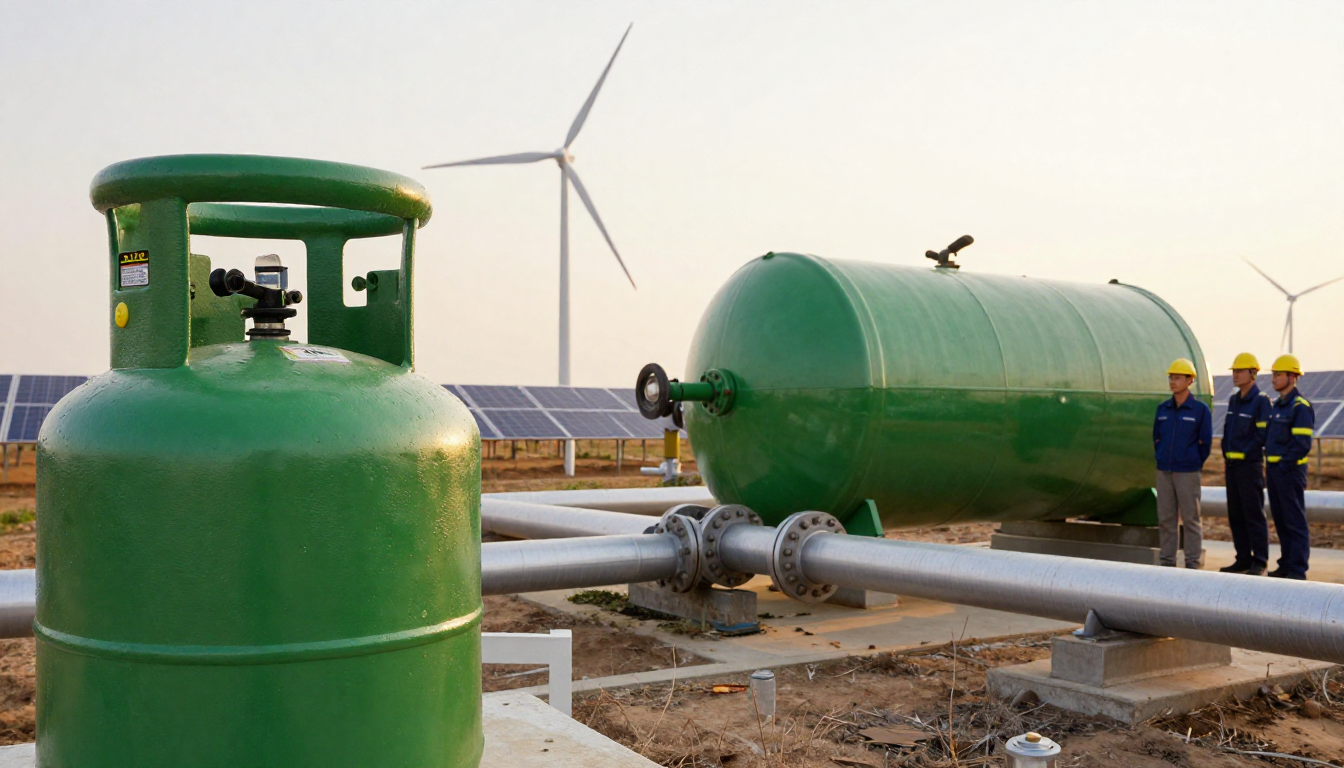
For decades, a steady stream of energy has been flowing beneath the industrial heart of South Africa. Not electricity. Not coal. Gas.
Methane-rich natural gas, piped thousands of kilometers from Mozambique’s Pande and Temane fields, has kept the country’s heavy industries humming. Steel mills. Glass plants. Breweries. Soft drink bottlers. Hospitals. Hundreds of factories, employing 70,000 people directly, depend on this gas for heat.
A glass furnace operates at over 1,400 degrees Celsius. You cannot run that on solar panels. A steel mill needs sustained, intense combustion that electricity cannot yet deliver at comparable cost or scale. For breweries and food manufacturers, electricity could theoretically substitute for gas—but at six times the current price. Their products would become uncompetitive overnight.
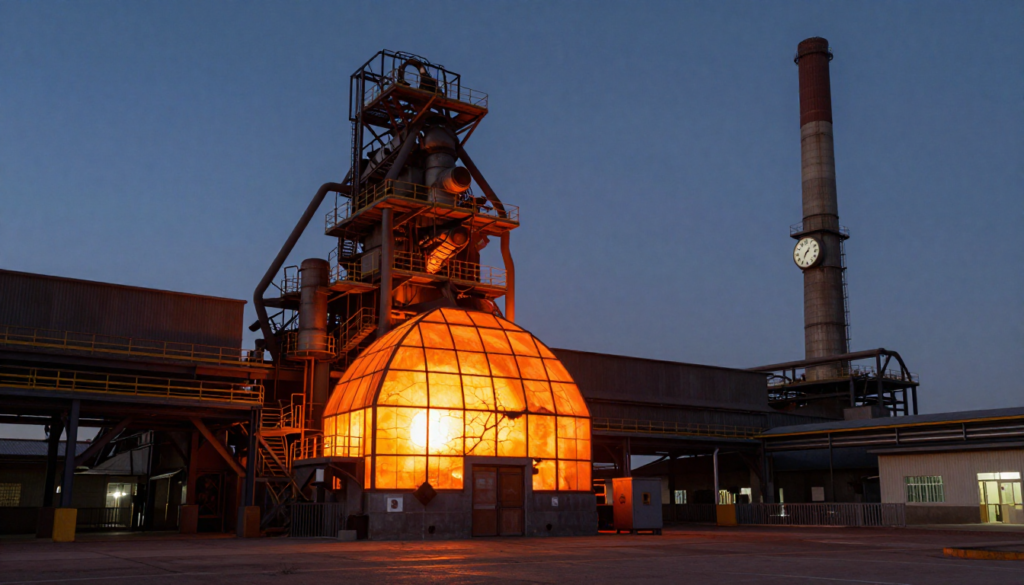
Now, that silent river is running dry.
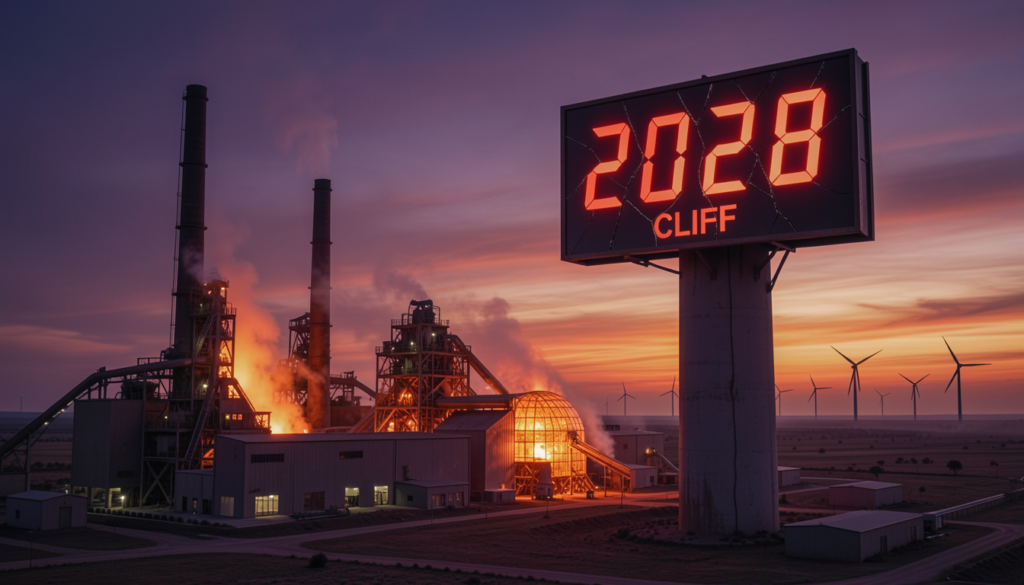
After decades of extraction, Mozambique’s gas fields are simply depleted. Sasol, the South African company that operates the pipeline, will stop supplying industrial customers in July 2028. A conditional extension to June 2030 is being explored using synthetic methane from coal conversion, but this requires regulatory approval and is not a permanent fix.
What Is at Stake?
The numbers are stark. Between R300 billion and R500 billion (US$18–30 billion) of annual economic output is at risk. That is roughly 4–7% of South Africa’s GDP. Over 400 smaller businesses, several hospitals, and around 8,000 households will also be directly affected.
If no replacement gas supply is found, 70,000 direct jobs could vanish. Entire industrial towns could hollow out. Beer prices would rise. Glass bottles would become scarce. Steel production would falter.
This is not a distant climate scenario. This is 2028. Twenty-six months from now.
The Obvious Answer That Doesn’t Work.
In early March 2026, South Africa’s Minister of Minerals and Petroleum Resources, Gwede Mantashe, suggested a solution: import liquefied natural gas (LNG).
LNG is natural gas chilled to minus 162°C, turned into a liquid, and shipped in specialised tankers from major producers like Australia and Qatar. When it arrives at a port, it is warmed back into gas and fed into the pipeline network.
On paper, it makes sense. The rest of the world does it. South Korea imports vast quantities of LNG. Why not South Africa?
Here is why not.
Building an LNG import terminal is not like building a warehouse. The cryogenic storage tanks, offloading equipment, regasification systems, and pipeline connections cost a minimum of US$500 million (roughly R9 billion). The technology does not scale down easily. The fixed costs are enormous, regardless of how little gas is processed.
To justify that investment, you need committed clients buying high volumes. South Korea’s industrial gas market is enormous. South Africa’s entire industrial gas market is less than one-fortieth the size of South Korea’s.
No LNG terminal has ever been built to serve a market this small. No financier will fund it. And even if someone did, the gas would cost three times the current price—a death sentence for price-sensitive industries.
The Folly of Burning Gas to Make Electricity.
Some in government and industry have proposed a workaround: use the imported LNG to generate electricity. The state-owned power utility, Eskom, or independent power producers would commit to buying large volumes of LNG for years. That guaranteed demand would, in theory, convince financiers to build the terminal.
But this solves nothing. It exposes the problem.
Solar and wind are now the cheapest new energy options in South Africa. Generating electricity from imported LNG would cost far more. No rational government should lock electricity consumers into above-market tariffs just to subsidise a gas import terminal that industries cannot afford.
Investors understand this. That is why, after 21 years of planning, not a single LNG import project has secured the funding to begin construction.
The Answer No One Is Discussing
The government has also floated domestic gas drilling. But the only potential gas basins would need years of appraisal drilling and environmental approvals. They would not produce a single molecule of gas before 2030—two years too late for industries facing a 2028 cutoff.
So what is the alternative?
The alternative, often overlooked due to its modest reputation, is liquefied petroleum gas (LPG)—propane, butane, or a combination of the two.
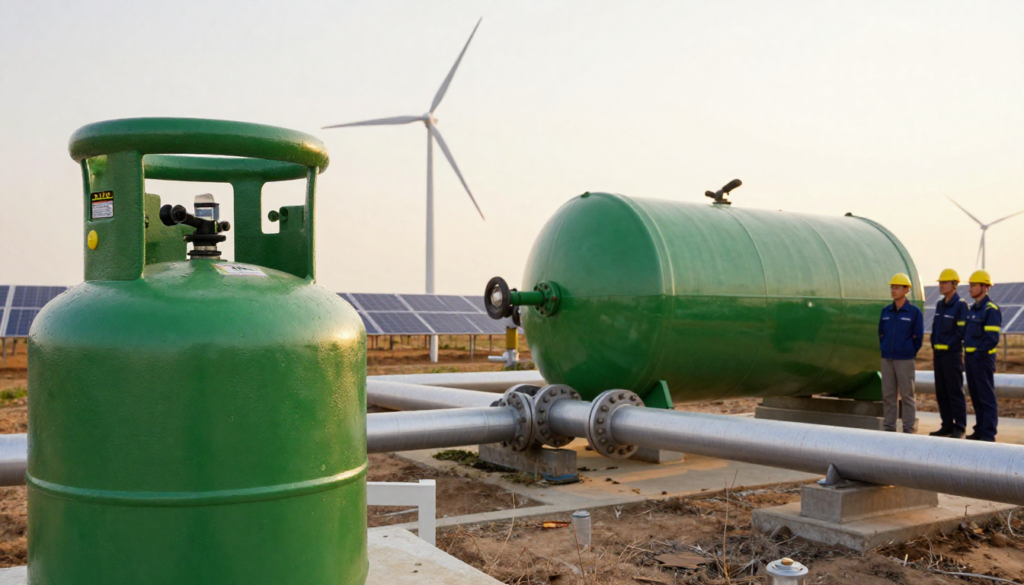
Propane is a byproduct of natural gas processing and oil refining. It is the stuff in the small green cylinders used for backyard braais and household stoves. But it is also a serious industrial fuel.
Here is why propane works for South Africa when LNG does not:
1. It scales down. The import and storage infrastructure for propane costs a fraction of what LNG requires. South Africa already has propane import terminals at Saldanha and Richards Bay, built years ago by private industry.
2. It is a direct replacement. Propane can be used in existing natural gas equipment with minimal modification. Existing pipelines can be converted to carry propane, eliminating the need for road tankers.
3. It offers financial flexibility. When South Africa eventually shifts to greener fuels—biogas, green hydrogen, or synthetic methane—switching from propane to those fuels will be a practical decision. An LNG terminal, once built, locks the country into 25 years of fossil fuel commitments and billion-dollar write-offs.
4. It works for grid backup. Eskom has already issued a tender for propane supply to its peaking plants—gas turbines that operate only during periods of peak electricity use. This is exactly the approach that recent research from chemical engineers has proposed.
The Emissions Question
Propane is a fossil fuel. Let us be clear about that.
But its emissions profile is very similar to the natural gas it would replace. It is not a climate solution. It is a bridge. It is a practical, cost-effective, and readily accessible bridge that ensures the continued operation of lights and factories as South Africa expands its use of wind, solar, batteries, and eventually green hydrogen.
The alternative—doing nothing—means industrial collapse by 2028. That is worse for the climate and for people.
Why Has No One Chosen Propane?
Two reasons.
First, image. Propane is associated with small household cylinders, not industrial might. Policymakers and executives dream of billion-dollar LNG terminals and global supply chains. Propane feels small. Provincial. A step backward.
Second, infrastructure optimism. Large projects systematically attract unrealistic optimism. Costs are underestimated. Benefits are overstated. Politicians love ribbon-cuttings for massive new ports. No one gets reelected by saying, “We upgraded the propane terminal.”
But the economists do not care about ribbon cuttings. And the private sector has repeatedly declined to fund LNG. That should tell you everything.
Time to Choose
The gas cliff arrives in 2028, whether South Africa is ready or not.
The country can continue chasing the LNG mirage—another 21 years of studies and unfunded plans—while industries shut down and jobs disappear.
Or it can act on the answer that has been there all along.
Expand wind and solar. Use propane as dispatchable backup for the national grid and as industrial heat for factories. Convert the existing pipeline. Scale up the import terminals already in place. Keep the steel mills running, the glass furnaces hot, the breweries brewing.
Propane is not perfect. It is not green. But it is possible. Possible is infinitely better than a 2028 collapse.
The question is not whether South Africa can afford to act. It is whether it can afford to keep ignoring the answer.