By Earth Focus Network News
“Building on the success of our recent school gardening projects, we are excited to explore egg hubs as a way to provide sustainable, protein-rich food for school meals. The engagement with ProVeg Nigeria has shown us that this is not only possible—it is essential. We invite ProVeg International to collaborate with us in Rwanda.”
— Bigirimana Feston, Founder, Here For Hope Foundation
ProVeg at the Africa Food Systems Forum 2026
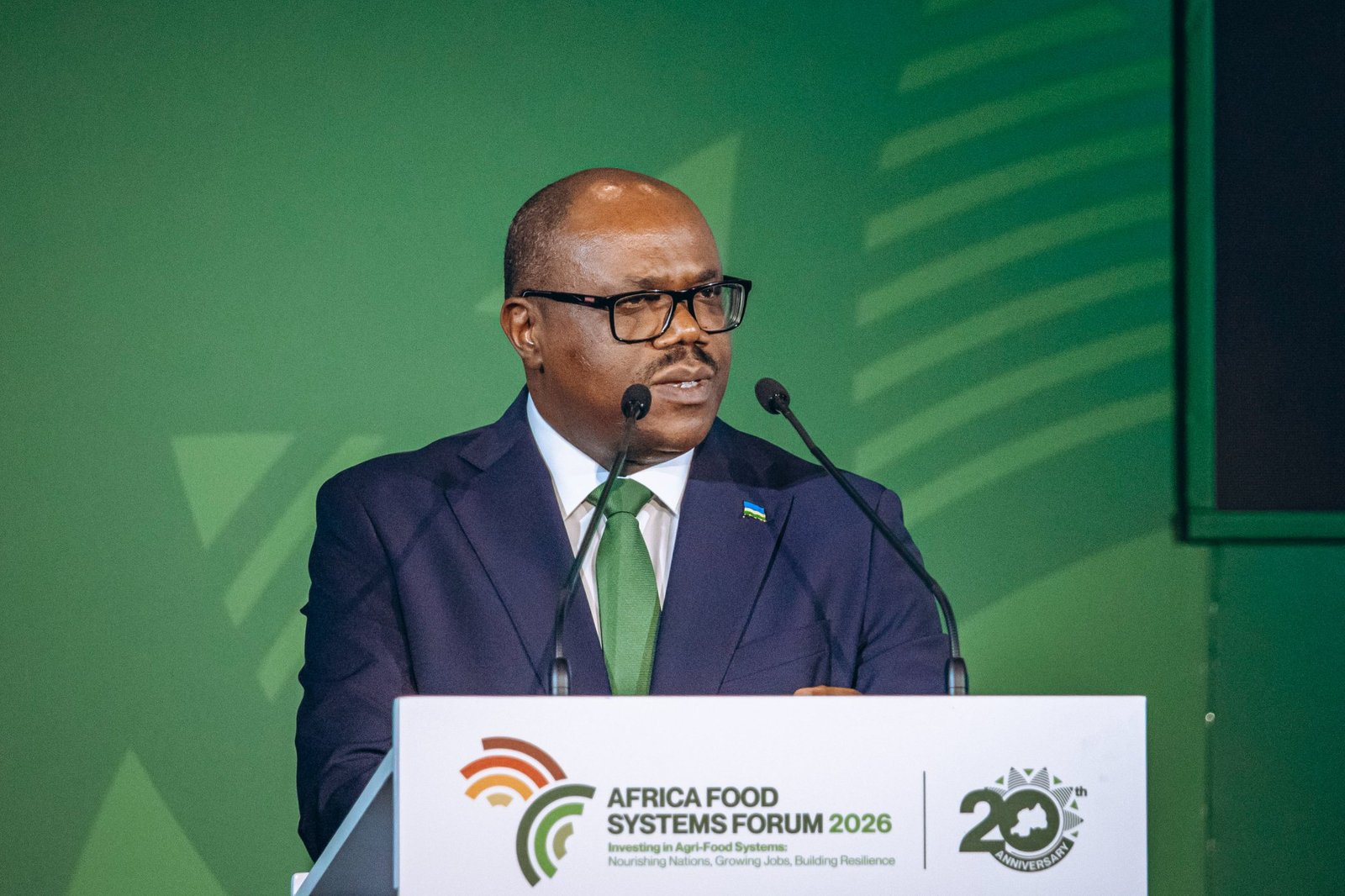
The Africa Food Systems Forum 2026 in Kigali marked a historic moment for sustainable food systems on the continent. ProVeg International officially joined as a strategic partner and sponsor of the Forum—a relationship that began in 2024 when ProVeg hosted its first side event dedicated to alternative proteins.
What started as a conversation has grown into a multi-year partnership. At AFSF 2026, ProVeg participated with its largest-ever delegation, bringing colleagues from its Nigeria, South Africa, and UN teams to Kigali. The delegation joined policymakers, researchers, entrepreneurs, investors, civil society, and development partners for one of Africa’s most influential food systems gatherings.
A Meeting of Visionaries
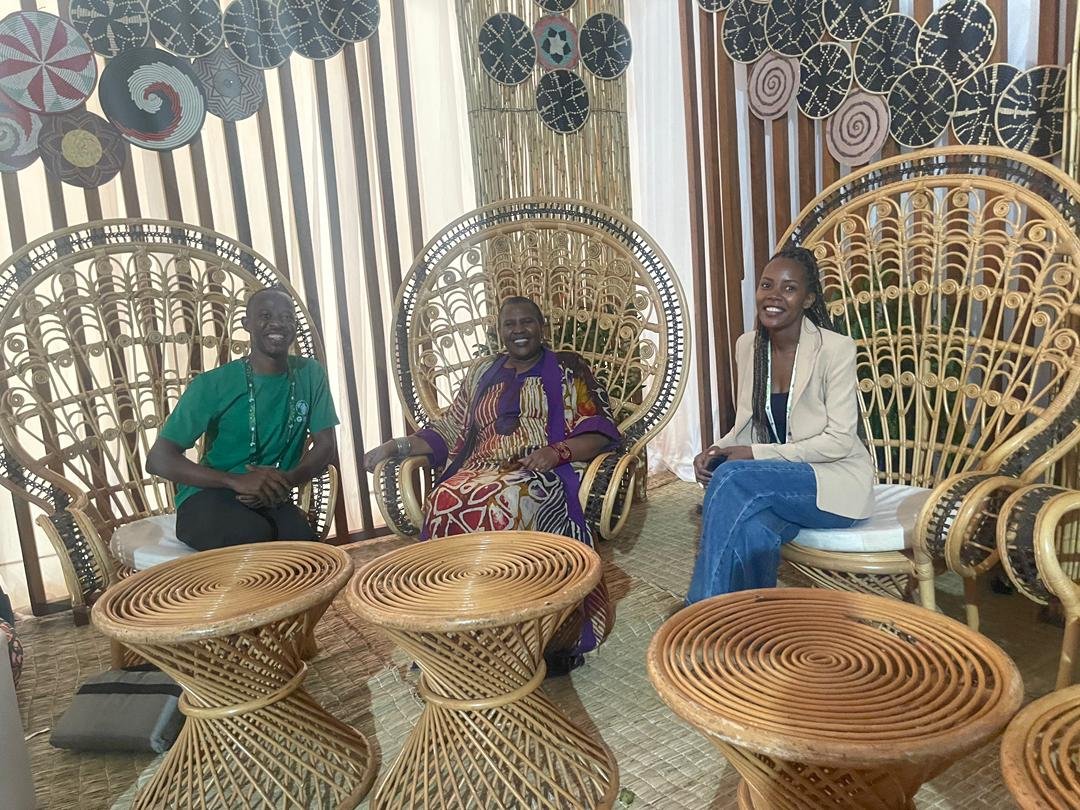
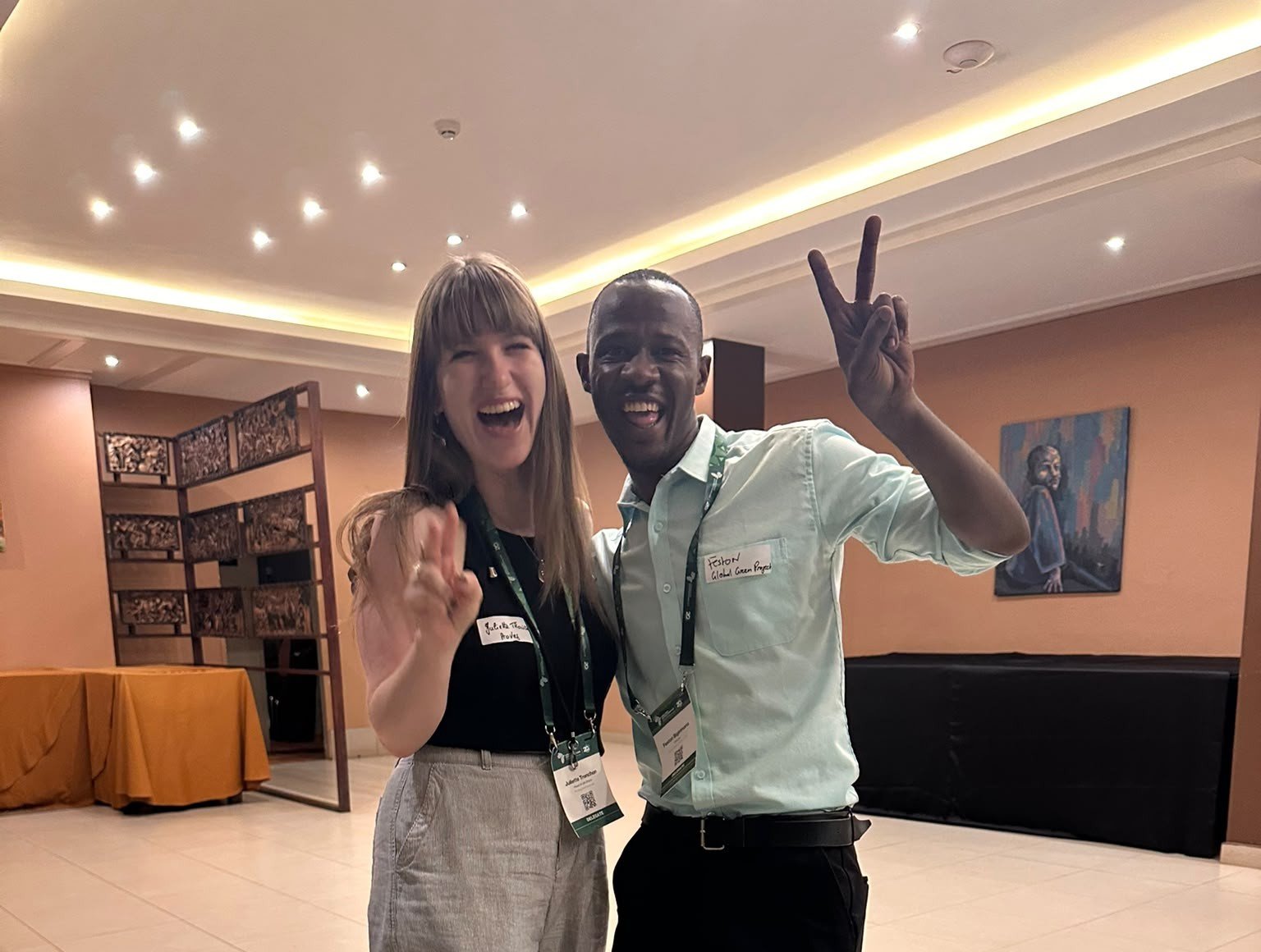
At the heart of this gathering was a pivotal meeting between Bigirimana Feston, founder of Here For Hope Foundation, and ProVeg’s international delegation. Our founder connected with Julitte Tronchon (Head of UN Affairs, ProVeg) and Hakeem Jimo (Country Director, ProVeg Nigeria).
Meet Feston and Jilitte.
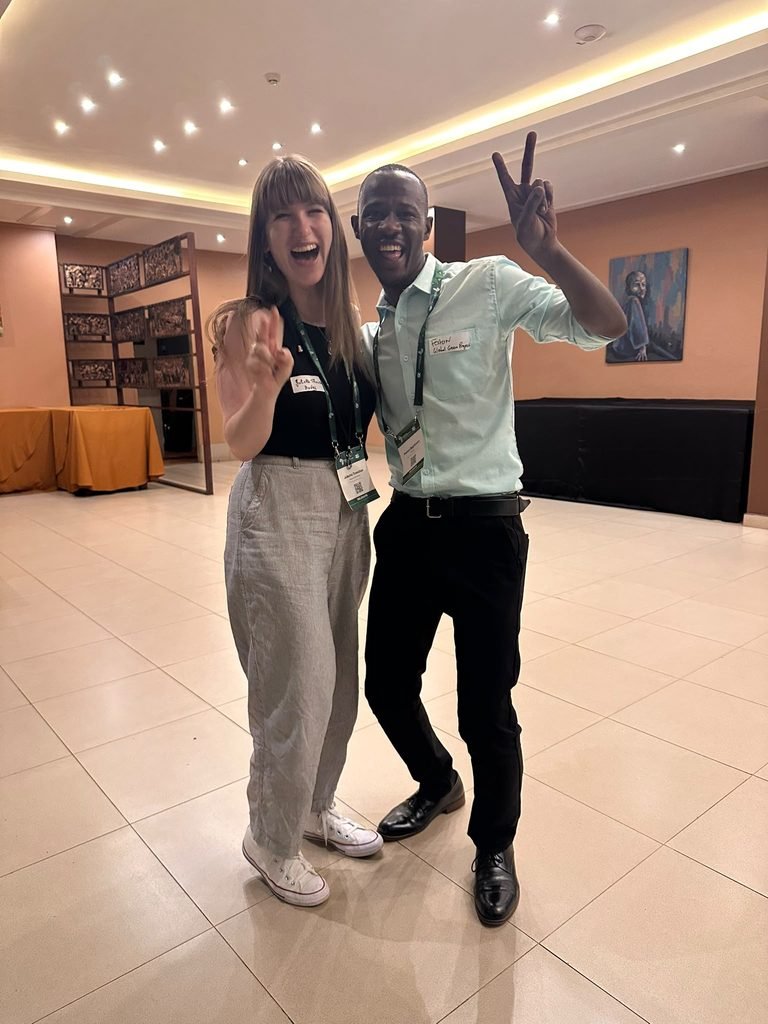
This was the second time Feston met Hakeem Jimo, having first connected in 2024. The meeting represented the culmination of a relationship built on shared vision, mutual learning, and a commitment to transforming food systems in Africa. As Feston stated:
“The engagement with ProVeg Nigeria has shown us that plant-based protein projects are not only possible—they are essential. We are committed to working with partners to make this vision a reality.”
ProVeg’s Mission and Global Impact
The Mission
ProVeg International‘s mission is to accelerate the transition to a sustainable global food system by making plant-rich foods and alternative proteins more accessible and appealing. Its vision is a world where everyone chooses delicious and healthy food that is good for all humans, animals, and our planet. The organization works to replace 50% of animal products globally with plant-based and cultivated foods by 2040.
Global Footprint
Active in 14 countries across four continents, ProVeg has permanent-observer status with the UNFCCC, is accredited for UNEA, and has received the United Nations’ Momentum for Change Award.
2025 Impact at a Glance
| Impact Area | Achievement |
|---|---|
| School Meals (Nigeria) | 22.4 million plant-based meals served to 2.2 million students |
| Meal Swaps (Global) | 25.1 million meals swapped from meat-based to plant-based in 2025 |
| Price Parity (Germany) | Plant-based baskets are now 5% cheaper than animal-based (2022: 52% premium). |
| Consumer Trends (Netherlands) | 45% identify as flexitarian; 20% of 18-24-year-olds want to go vegetarian. |
| Policy Influence | Co-authored the Belém Declaration on Plant-Rich Diets, presented at COP30 |
ProVeg Nigeria: A Model for Africa
ProVeg Nigeria, led by Hakeem Jimo, is transforming how Nigerians eat. The team has developed programs to spread awareness about plant-based diets—working with hospitals, clinics, medical professionals, and schools.
Key achievements in Nigeria:
- 22.4 million plant-based meals served to students.
- Plant-based proteins reducing school feeding costs by up to 40%
- Culturally adapted versions of traditional dishes gaining acceptance.
- Partnerships with hospitals, schools, and community organizations.
Hakeem Jimo’s motivation is clear:
“It’s all about the numbers. Nigeria is set to become the world’s third most populous country in the next couple decades. But time is not on our side. To truly address climate change and health epidemics, we need to shift our diets today.”
Global Food System Contributions
ProVeg’s work extends far beyond Africa. Key global contributions include:
- Dietary Guidelines Influence: ProVeg contributed to the EAT–Lancet 2.0 Report, the most comprehensive global scientific evaluation of healthy, sustainable, and just food systems.
- Policy Advocacy: The Belém Declaration on Plant-Rich Diets, co-authored and launched by ProVeg, was presented at COP30 in Brazil and endorsed by more than 100 stakeholders.
- Food Innovation: The ProVeg Incubator has supported over 130 startups since 2018, raising US$ 563 million.
- EU Policy Influence: ProVeg contributed to the EU Plant-Based Action Plan and organized a European Parliament event with 120 stakeholders.
Here For Hope Foundation: School Gardens in Rwanda
Our School Garden Program
Since 2024, Here For Hope Foundation has partnered with six schools in Rwanda’s Eastern Province to establish school vegetable gardens. This initiative has transformed how schools approach nutrition, education, and food security.
| Achievement | Impact |
|---|---|
| 6 partner schools | Schools in Kayonza District |
| 150 students engaged | Hands-on learning about food production |
| 430 trees planted | 85% survival rate |
| Reduced food costs | Significant savings on school meals |
| Improved nutrition | Fresh vegetables added to meals |
Core Activities:
- Vegetable production: Growing high-iron beans, amaranth, and other nutrient-rich vegetables
- Climate-smart agriculture: Teaching students sustainable farming practices
- Nutrition education: Linking classroom learning to garden activities
- Environmental awareness: Connecting food production to ecosystem health
Voices from Our Schools
Students have embraced the program with enthusiasm:
“Learning about how plants grow makes me want to be a farmer who protects the earth. I taught my parents how to make compost at home!”
— Emmanuel, Primary 4 Student
“Before this program, I didn’t know that trees help bring rain. Now, I water my tree every day because I want it to grow tall and protect our school.”
— Mugisha, Primary 3 Student
Why School Gardens Matter in Rwanda and Africa
School gardens are not just about growing food—they are about transforming communities.
In Rwanda:
- The national school feeding program reaches approximately 4.5 million learners
- Malnutrition remains persistent: 20.6% food insecurity, nearly one-third of children stunted
- The government has built 3,282 school kitchens and installed 7,174 cooking stoves
- Rwanda’s PSTA 5 prioritizes linking agriculture to nutrition
Across Africa:
- School gardens provide hands-on nutrition education
- They create local food supply chains, reducing dependence on imports
- They teach climate-smart agriculture to the next generation
- They support women and youth through agricultural skills development
As one Rwandan teacher noted, “The nutrition of school children is in our hands. It’s up to us to ensure that students eat nutritious and healthy foods. This is essential for their brain development, overall health, and educational success.”
The Next Step: Egg Hubs
Building on the success of school gardens, Here For Hope Foundation is exploring egg hubs as a way to provide sustainable, protein-rich food for school meals.
Why Eggs?
Eggs are a powerhouse of nutrition:
- High-quality protein essential for child growth
- Iron, vitamin A, and vitamin D to combat deficiencies
- Affordable—among the cheapest sources of animal protein
- Scalable—poultry farming can be done at a small scale
What Are Egg Hubs?
Egg hubs are localized, community-based models that:
- Support smallholder poultry farmers with high-yield breeds
- Strengthen supply chains through local distribution networks
- Integrate eggs into school feeding programs
- Create income opportunities for schools and communities
How Egg Hubs Integrate with School Gardens
| Current Program | Egg Hub Addition |
|---|---|
| Vegetable gardens | Poultry component added to school farms |
| High-iron bean cultivation | Manure from poultry enriches gardens. |
| Nutrition education | Protein diversification education |
| Student engagement | Animal husbandry and poultry management |
| School meals | Protein-rich eggs added to meals |
| Reduced food costs | Further cost savings through egg production |
Learning from ProVeg Nigeria
ProVeg Nigeria’s school feeding model has demonstrated:
- Plant-based and protein-rich meals can be served at scale
- Local production creates jobs and supports farmers
- Culturally adapted recipes increase acceptance
- School feeding can be sustainable and affordable
Alignment with ProVeg’s Mission
The egg hub vision directly aligns with ProVeg’s mission and advocacy agenda:
The Belém Declaration on Plant-Rich Diets
ProVeg’s Belém Declaration calls on UN member states to:
- Establish National Action Plans for Plant-Based Foods
- Commit to a deadline for publication
- Commit to financial support for implementation
Denmark introduced the world’s first Action Plan for Plant-Based Food in October 2023. Rwanda has the opportunity to be a leader in Africa.
ProVeg’s Contribution to Africa
Hakeem Jimo has emphasized:
“The impact we have in Lagos and in Nigeria can easily be extended across the continent and to lovers of African cuisine worldwide.”
Rwanda is ready to be part of that extension. With its ease of doing business (4th in Africa), government support for PSTA 5, and youth population, Rwanda is uniquely positioned to lead plant-forward food systems in East Africa.
A Bold Call to Action: ProVeg, Let’s Partner in Rwanda!
Currently, ProVeg International does not have an active project in Rwanda. This presents a significant opportunity for collaboration.
Here For Hope Foundation has already laid the groundwork with six partner schools in Kayonza District, demonstrating the feasibility and impact of school-based food systems interventions. We are now ready to scale our work and integrate plant-based protein solutions—starting with egg hubs.
Why ProVeg Should Consider Rwanda
| Factor | Rwanda’s Position |
|---|---|
| Ease of Doing Business | 4th in Africa (World Bank) |
| GDP Growth | 8-9.4% (MINECOFIN 2024-2025) |
| Government Support | PSTA 5 prioritizes climate-smart agriculture and nutrition. |
| Youth Population | Over 70% under 30—ideal for food innovation |
| Regional Hub | Gateway to EAC, COMESA, and AfCFTA markets |
| Food Security Focus | School feeding, nutrition, and agriculture are national priorities. |
Why Plant-Based Proteins?
Africa has the highest protein deficiency in the world. Protein consumption is projected to increase by 300% in the next two decades. As Hakeem Jimo has stated, animal protein alone will not meet that demand—especially as populations double. Plant-based proteins are more affordable, and tackling protein deficiency will require a “protein mix” from all sources.
Why Egg Hubs?
Egg hubs offer a practical, scalable solution that:
- Improves child nutrition through affordable, high-quality protein
- Supports local farmers through predictable markets
- Educates a generation about sustainable food systems
- Builds resilience against climate change and food insecurity
- Creates jobs for youth and women in rural communities
- Builds on existing school gardens for integrated food production
We Invite ProVeg International to Collaborate
Here For Hope Foundation is seeking a partnership with ProVeg International to:
| Partnership Area | Potential Activities |
|---|---|
| Technical Assistance | Adapt ProVeg Nigeria’s school feeding model to Rwanda. |
| Knowledge Exchange | Share best practices, recipes, and training materials. |
| Pilot Support | Launch egg hubs in existing partner schools. |
| Scaling | Expand to 50+ schools across the Eastern Province. |
| Advocacy | Jointly advocate for plant-forward school feeding policies |
The Bigger Picture: Building a Protein-Secure Africa
The Africa Food Systems Forum 2026 theme—“Investing in Africa’s Agri-Food Systems: Nourishing Nations, Growing Jobs, Building Resilience”—could not be more timely. Rwanda’s school feeding program, reaching 4.5 million learners, offers a platform to demonstrate how plant-forward, protein-rich food systems can transform nutrition, support farmers, and build resilience.
Here For Hope Foundation is ready to lead in Rwanda. But we cannot do it alone. We invite ProVeg International, along with development partners, financial institutions, government agencies, private sector actors, NGOs, research institutions, and impact investors, to join us.
A Personal Invitation
“We have been inspired by ProVeg Nigeria’s work serving 22.4 million plant-based meals to students. We believe this model can work in Rwanda. We invite ProVeg International to collaborate with Here For Hope Foundation—to bring this proven approach to Rwandan schools and build a protein-secure future for our children.”
— Bigirimana Feston, Founder, Here For Hope Foundation
📞 Contact Us
Here For Hope Foundation
- 📧 Email: info@hhfoundation.com
- 📞 Phone: +250787192428
- 🌐 Website: www.earthfocusnetwork.com
- 📍 Location: Kayonza District, Eastern Province, Rwanda
ProVeg International
- 🌐 Website: www.proveg.org
- 📧 Contact: info@proveg.org
Other related artcles: