By Feston Bigirimana, Founder, Here For Hope Foundation
“Before this program, I didn’t know that trees help bring rain. Now, I water my tree every day because I want it to grow tall and protect our school.”
— Mugisha, Primary 3 Student
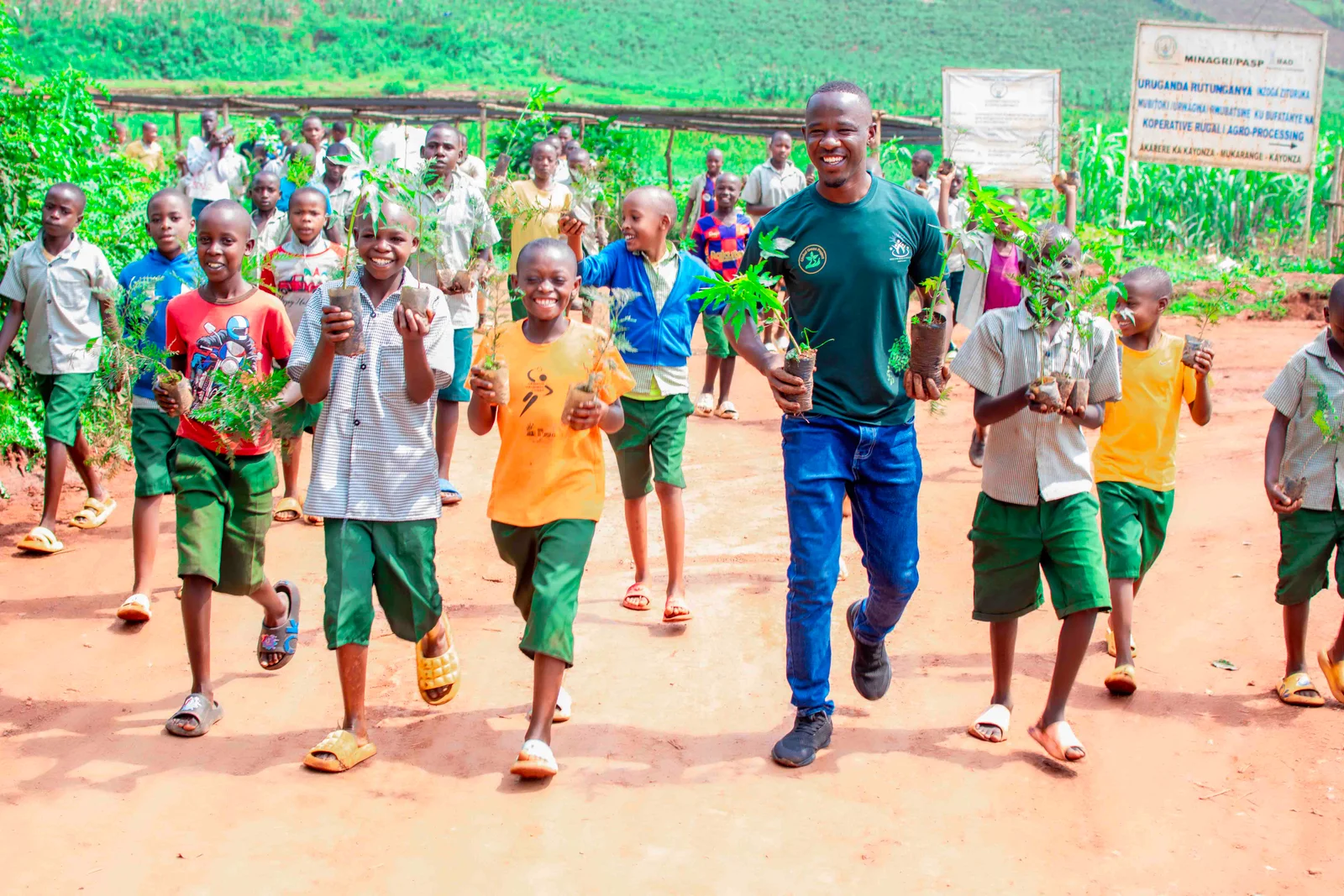
In the Eastern Province of Rwanda, where climate change is not a distant threat but a daily reality, a quiet revolution is taking place. It is not happening in boardrooms or at international conferences. It is happening in schoolyards, where children as young as six are learning that their hands can heal the earth.
In 2024, Here For Hope Foundation launched a pilot program in Kayonza District that integrated climate awareness into early childhood education. The results were remarkable: 150 students engaged, 430 trees planted, and a generation of young environmental advocates emerging from two primary schools.
This is the story of how we planted seeds—and why investing in our youngest citizens is the most powerful climate strategy we have.
The Climate Education Gap in Rwanda’s Schools.
Rwanda’s education system has made significant strides. The country’s 2019 competency-based curriculum emphasizes critical thinking and practical skills. However, environmental education in primary schools has often remained confined to textbooks—discussed but not lived.
The gap is particularly concerning given the environmental challenges facing Rwanda’s Eastern Province. As documented in our previous article on the “My Tree, My Legacy” campaign, Kayonza District is ground zero for climate vulnerability. 75% of its land area is highly susceptible to drought, and 93.1% of residents rely on firewood for cooking. Deforestation between 2009 and 2019 resulted in the loss of 18,179 hectares in Kayonza alone.
Yet, despite these challenges, environmental education at the primary level has historically focused on theory rather than action. Students learn about deforestation but rarely plant a tree. They study the water cycle but seldom observe how trees protect watersheds.
The question was clear: What if we changed that?
The Vision: Building a Foundation for Lifelong Stewardship
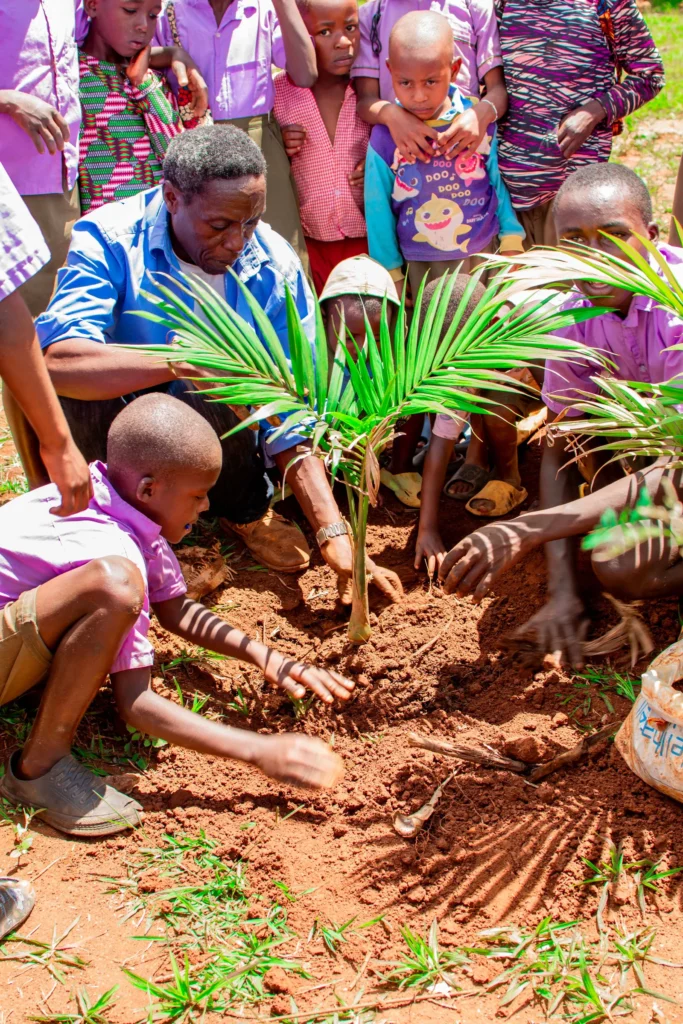
Long-term environmental change does not happen overnight. It happens over generations. That is why the Early Childhood Climate Education project focused on children between the ages of 6 and 12—a critical developmental window when values and habits are formed.
Our vision was simple but ambitious: To cultivate a generation of environmentally conscious youth equipped with the knowledge and passion to protect and restore their natural surroundings.
Our mission was equally clear: To embed practical, engaging climate education into the daily lives of primary school students, fostering a deep connection between children and the environment.
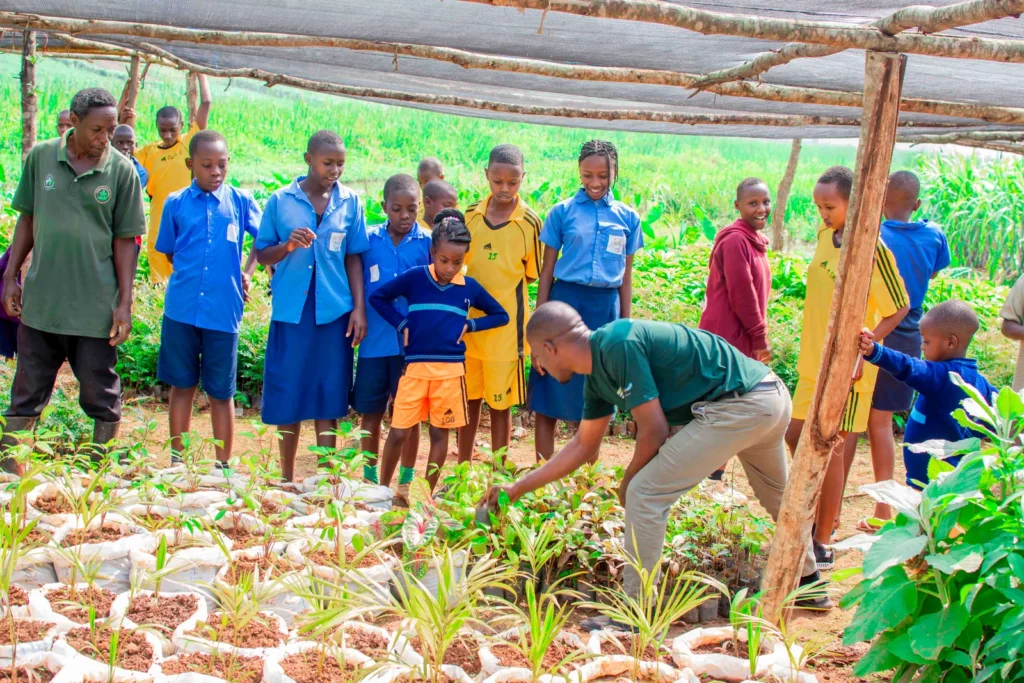
We partnered with two primary schools in Kayonza District, training teachers, developing age-appropriate curricula, and transforming school grounds into living laboratories for sustainability.
From Theory to Action: The Program in Practice
The curriculum moved far beyond textbooks. Students participated in interactive workshops where they learned fundamental concepts:
- The Water Cycle: How trees absorb rainfall, release moisture, and maintain local water tables.
- Soil Health: How tree roots prevent erosion and enrich soil with organic matter.
- Biodiversity: The importance of different species for ecosystem resilience.
- Waste Management: Basic principles of reduce, reuse, and recycle.
But the real magic happened when students left the classroom.
Under the guidance of agronomists and teachers, students prepared soil, planted seedlings, and took ownership of their ongoing care. Each child was assigned a tree to nurture, creating personal accountability and pride.
Voices from the Community
The program’s impact was best captured by the children themselves.
“Learning about how plants grow makes me want to be a farmer who protects the earth. I taught my parents how to make compost at home!”
— Emmanuel, Primary 4 Student
“I love seeing my tree grow. It’s like we are growing together.”
— Ange, Primary 2 Student
Teachers reported marked improvements in student engagement, attentiveness, and teamwork. Parents began noticing changes at home—children reminding families to conserve water, asking about recycling, and even teaching their parents about composting.
As one school administrator observed: “We underestimated what children could do. They are not just learning—they are leading.”
Key Achievements of the 2024 Pilot Program
| Metric | Result |
|---|---|
| Students Engaged | 150 students across two primary schools |
| Trees Planted | 430 native and fruit-bearing trees |
| Survival Rate | 85% after the first dry season |
| Environmental Clubs Established | 2 active, student-led clubs |
| Community Workshops | Multiple sessions where students presented to parents and leaders |
| Schools Transformed | 2 green learning hubs created |
The Impact: Beyond the Numbers
Ecological Impact
The 430 trees planted—including avocado, mango, and native species—are already making a difference. They provide shade, improve soil quality, reduce erosion, and will eventually supplement school feeding programs with nutritious fruit.
Educational Impact
Students who participated in the program now possess foundational knowledge of climate science, conservation, and sustainable practices. They have developed practical skills in planting, watering, and caring for trees. Teachers reported improved focus and teamwork during outdoor activities.
Social Impact
Perhaps most significantly, students became environmental advocates within their families. Children taught parents about composting, water conservation, and the importance of trees. This knowledge transfer created a ripple effect, amplifying the program’s impact far beyond the schoolyard.
Connecting to National and Global Goals
The Early Childhood Climate Education project directly supports several of Rwanda’s national priorities and UN Sustainable Development Goals:
- SDG 4 (Quality Education): By providing inclusive, practical environmental education.
- SDG 13 (Climate Action): Through direct carbon sequestration efforts and climate literacy.
- SDG 2 (Zero Hunger): By planting fruit-bearing trees that will supplement school feeding programs.
- SDG 6 (Clean Water and Sanitation): By teaching the importance of trees in maintaining local water tables and preventing soil erosion.
The program also aligns with Rwanda’s National Strategy for Transformation (NST2) and Vision 2050, which prioritize climate resilience, environmental restoration, and human capital development.
Lessons Learned and Challenges Overcome
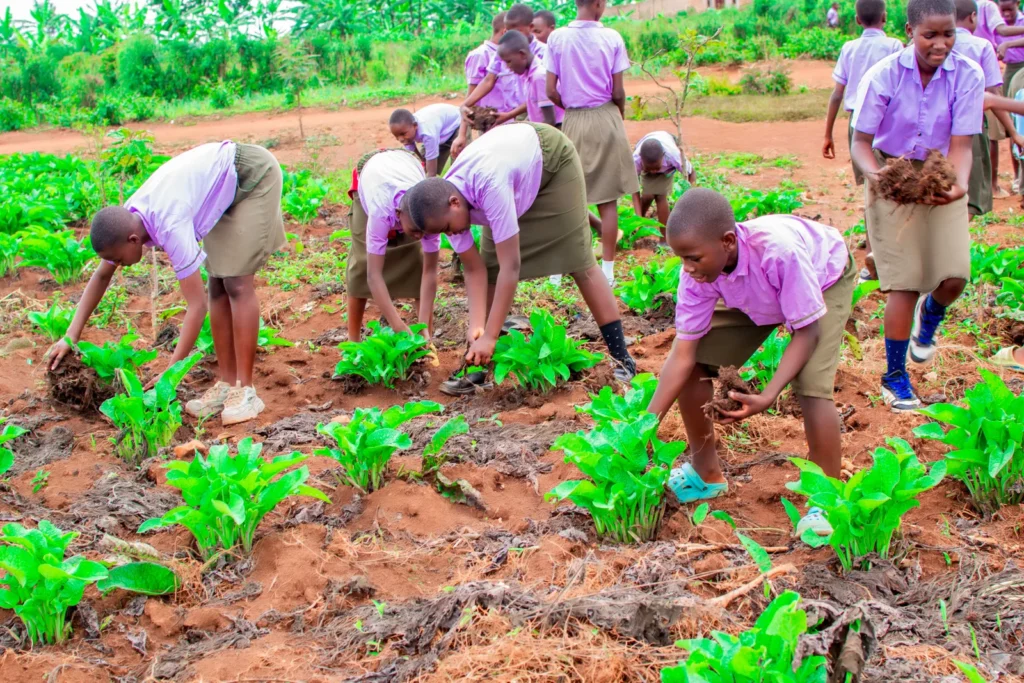
No pilot program is without challenges. We encountered several:
Challenge 1: Water Access During Dry Seasons
The Eastern Province experiences prolonged dry seasons, making it difficult to maintain newly planted saplings. Students showed remarkable dedication, often carrying water from nearby sources to nurture their trees. However, this was not sustainable.
Solution: We learned that integrating rainwater harvesting systems into future school projects is essential. Moving forward, we will install collection tanks and drip irrigation systems to ensure consistent water access.
Challenge 2: Continuous Teacher Training
Teachers are the backbone of any educational program. While initial training was provided, some educators expressed the need for ongoing professional development to keep the curriculum dynamic and engaging.
Solution: We are developing a comprehensive teacher training manual and establishing a mentorship program where experienced educators support new participants.
Challenge 3: Resource Constraints
Scaling the program requires resources—seedlings, tools, educational materials, and transport. The pilot phase was supported by partner contributions, but expansion demands additional investment.
Solution: We are actively seeking partnerships with government agencies, international donors, and private sector stakeholders to secure sustainable funding.
Why Early Childhood Education is Critical for Climate Action
There is a growing body of research demonstrating that environmental education in early childhood has lasting benefits:
- Formative Years: Children between 6 and 12 are developing values, attitudes, and behaviors that shape their adult lives. Environmental stewardship learned during these years becomes deeply ingrained.
- Peer Influence: Children influence their peers and families. A child who learns about conservation at school often becomes a teacher at home.
- Long-Term Commitment: Research suggests that individuals who engage in environmental activities during childhood are more likely to adopt sustainable practices as adults.
- Cost-Effectiveness: Investing in preventive education is far more cost-effective than addressing environmental degradation after it occurs.
As one international study noted, “Early childhood education for sustainability empowers children to develop resilience, critical thinking, and a sense of agency—essential qualities for navigating the climate crisis.”
The Legacy: A Generation of Green Citizens
The true legacy of the Early Childhood Climate Education project is not measured in trees planted or students reached—though those numbers matter. The true legacy is the generation of Rwandan children who will grow up knowing that they have power.
They know that their hands can dig soil, plant seeds, and nurture life. They know that trees bring rain, that soil needs protection, and that even a small action can create change. They are not passive recipients of aid or victims of climate change. They are active participants in building a sustainable future.
As one parent told us: “My child taught me that we must protect our trees. I never thought of myself as a protector of the environment. Now I do.”
Our Commitment: Vision for 2025 and Beyond
Building on the success of the 2024 pilot, our vision for 2025 is ambitious:
- Scale to 10 additional schools within Kayonza District.
- Introduce advanced modules on renewable energy, climate adaptation, and sustainable agriculture.
- Establish inter-school environmental competitions to foster a spirit of green innovation.
- Install rainwater harvesting systems in all participating schools.
- Create a network of student environmental clubs that connect across schools and share best practices.
We are also exploring partnerships with the Rwanda Basic Education Board (REB) to integrate our curriculum into the national framework, ensuring that climate education becomes a standard part of primary education nationwide.
Why This Matters for Earth Focus Network
At Earth Focus Network, we believe that knowledge and action go hand in hand. Our platform connects professionals, researchers, and practitioners dedicated to effective conservation and sustainability solutions. By sharing stories like the Early Childhood Climate Education project, we demonstrate that environmental action is happening on the ground—and that it works.
We invite our members to learn from this model, adapt it to their communities, and share their own success stories. Together, we are building a lasting ecosystem of changemakers.
Join the Movement
Whether you are an educator, a parent, a student, or a professional, you have a role to play in cultivating the next generation of environmental stewards.
Visit Earth Focus Network News to explore more stories of impact, connect with like-minded professionals, and discover opportunities to contribute to a sustainable future.
Because every tree planted, every child taught, and every legacy nurtured begins with a single step. And that step starts with you.
Join Earth Focus Network today.
We extend our deepest gratitude to the teachers, parents, and community leaders who made this program possible. We thank the District of Kayonza for their invaluable guidance and support. And we thank German Cooperation in Rwanda for their partnership and commitment to building a resilient, sustainable future.