About.
Date: November 9–20, 2026
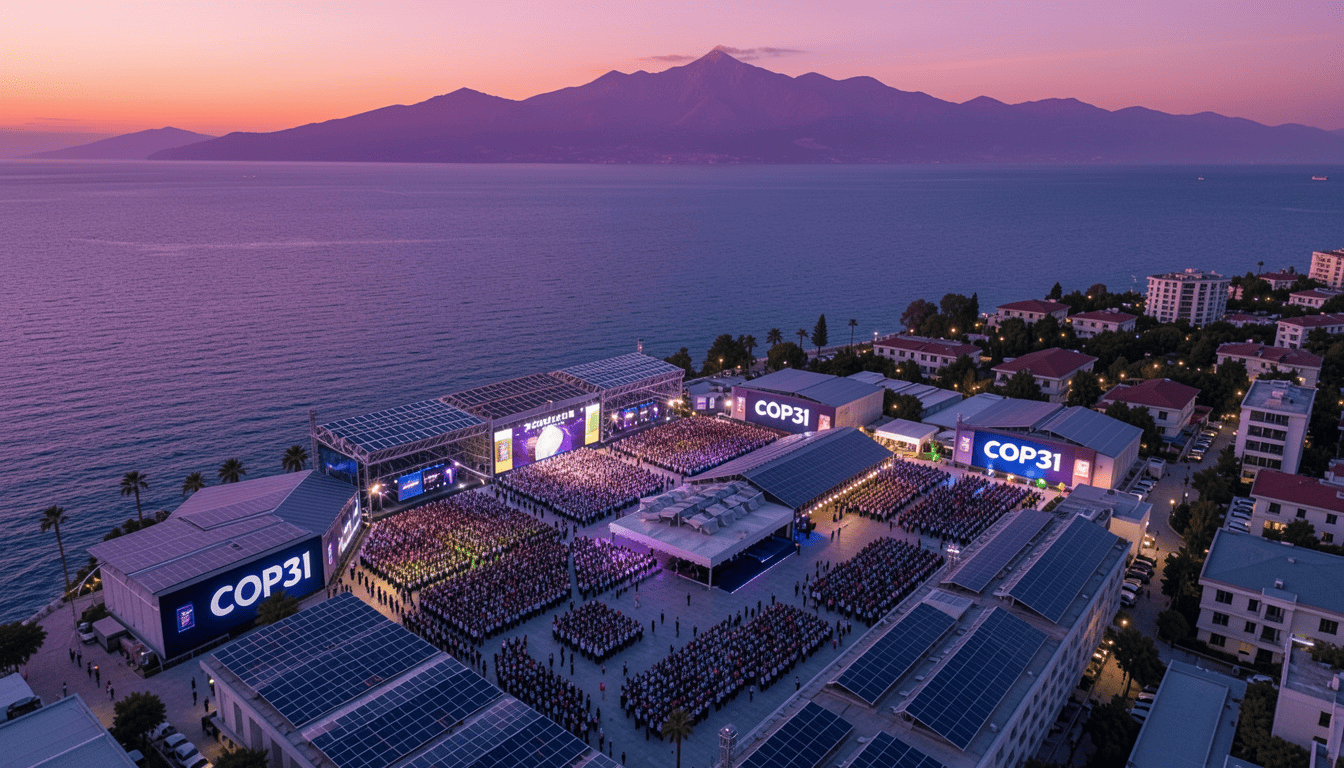
Location: Antalya, Türkiye
Organizer: UNFCCC
Focus: Fossil fuel transition progress, climate finance, adaptation, loss and damage.
Let’s be honest about COP.
You’ve heard it before. “This is the most important COP yet.” Every single year. It gets exhausting.
But here’s the thing about COP31 – it’s different.
Not because of the location (though Antalya in November is gorgeous). Not because of the Turkish hospitality (which is legendary).
It’s different because for the first time, countries aren’t negotiating a new promise. They’re being held accountable to an old one.
Remember the “transition away from fossil fuels” language from COP28 in Dubai? That wasn’t just diplomatic poetry. It was a commitment. And at COP31, the world gets to ask: So… how’s that going?
Why Antalya? Why Türkiye?
Türkiye is an interesting choice.
It’s a country that still relies heavily on imported fossil fuels. But it’s also racing toward renewables – solar, wind, hydropower. It sits at the crossroads of Europe, Asia, and the Middle East. A bridge. Occasionally an awkward one.
Hosting COP31 here sends a message: The energy transition isn’t a straight line. It’s messy. But we’re moving.
Plus, Antalya knows how to host. The city has world-class convention facilities, direct flights from everywhere, and November weather that won’t make delegates miserable. Small things. But they matter when you’re negotiating for 12 hours straight.
What’s actually on the table?
Three big things. Maybe four.
1. The Fossil Fuel Transition Progress Report
COP28 said “transition away.” COP30 in the Amazon (2025) probably added pressure. COP31 is where countries have to show receipts.
Expect painful conversations about:
- Coal phase-out timelines (especially for countries still building new plants)
- Fossil fuel subsidies (who’s still spending billions to prop up oil and gas)
- Just transition plans (what happens to workers and communities left behind)
Prediction: Some countries will show up with real plans. Others will show up with excuses. The tension will be real.
2. Climate Finance – The Neverending Story
Rich countries promised $100 billion per year by 2020. They missed the deadline. They sort of caught up. Now the goal is being renegotiated upward – way upward.
Developing countries want $1 trillion+ per year by 2030. Yes, trillion with a T.
Who pays? How is it delivered (grants vs. loans)? Who gets access? These fights will dominate the corridors in Antalya.
3. Adaptation – The Quiet Crisis
Mitigation (stopping climate change) gets the headlines. Adaptation (living with it) gets the leftovers.
At COP31, expect a push for a Global Goal on Adaptation that actually means something – not just vague language about “building resilience.”
For countries already dealing with floods, droughts, and rising seas, the issue isn’t academic. It’s survival.
4. Loss and Damage – The New Kid on the Block
COP27 created a loss and damage fund. COP28 provided some funding for it. COP31 will be about making it work.
Who qualifies? How fast can money move? Can countries access it without begging?
This is the most emotionally charged issue at COP. Don’t expect easy answers.
Who should actually attend?
Let me be direct.
You should go if:
- You work in climate policy (obviously)
- You’re a journalist covering environment or global affairs
- You represent an NGO that wants to influence negotiations
- You’re a business leader trying to understand regulatory risk
- You’re a researcher who wants to see how science becomes policy
- You’re a student (observer badges are available—apply early)
You might want to skip if:
- You hate crowds (30,000+ people is normal)
- You can’t handle bureaucracy (negotiations move at glacial speed)
- You’re looking for a vacation (Antalya is beautiful, but you won’t see much of it)
What past attendees say (paraphrased, but real)
“The first COP is overwhelming. The second COP, you start to understand. The third COP, you realize nothing happens in the plenary—it happens in the side events and hallway conversations.”
“Bring your snacks. The food lines are brutal.”
“Don’t try to attend everything. Pick three sessions a day max. Use the rest of the time to meet people.”
Pro tips from COP veterans
Register early. Observer badges run out. Side events fill up. Hotels in Antalya will be expensive, so book six months in advance.
Wear comfortable shoes. You’ll walk miles between buildings. This is not a fashion show.
Bring business cards. Yes, even in 2026. COP is old-school that way.
Download the app. The UNFCCC app has maps, schedules, and (usually) working notifications.
Don’t skip the side events. That’s where the real conversations happen. Main plenaries are for speeches. Side events are for problem-solving.
Stay hydrated. November in Antalya is pleasant, but you’ll be inside most of the day. Air conditioning + talking nonstop = dehydration.
Follow up within a week. Everyone meets everyone at COP. Most connections fade. Be the person who actually sends that email.
What makes COP31 different from previous years?
Three things.
First – The first COP after the 2025 Global Stocktake. The GST was supposed to be a “report card” on Paris Agreement progress. Spoiler: we’re failing. COP31 will be about course correction.
Second, the fossil fuel transition is no longer theoretical. Countries have had two years since COP28 to figure out what “transition away” actually means. Now they have to show their homework.
Third – Geopolitics is messier than ever. War in Europe. Tensions in the Middle East. Trade disputes between major economies. COP happens in this context, not outside it. Negotiations will be harder. Don’t expect easy wins.
A quick note on Türkiye
Türkiye has been criticized for its human rights record and press freedom. Some activists have called for boycotts.
My take? COP is about the planet, not the host country. Engaging with the process – even imperfectly – is better than sitting it out.
That said, be aware of the context. Solidarity with local civil society matters. Don’t be a performative activist. Don’t be a naive tourist. Find the middle ground.
Practical details you actually need.
| Dates | November 9–20, 2026 |
| Location | Antalya, Türkiye (specific venue TBD – likely ANFAŞ Expo Center) |
| Registration | Opens ~June 2026 via UNFCCC website |
| Badge types | Party (government), Observer (NGO), Media, Guest |
| Cost | Free for Party delegates. Observer fees apply (varies by organization type) |
| Accommodation | Book early. Prices will triple during COP weeks |
| Transport | Antalya Airport (AYT) has direct flights from Europe, Middle East, and Central Asia |
| Visa | Check Türkiye visa requirements for your nationality. Apply 3+ months ahead. |
Bottom line
COP31 won’t save the world.
No single conference can.
But it’s one of the few times a year when the people who could save the world are in the same room. Negotiators. Ministers. Activists. Scientists. Business leaders.
That convergence matters.
If you really care about climate change – really care, not just post about it – you should be in Antalya in November.
Or at least following every word.