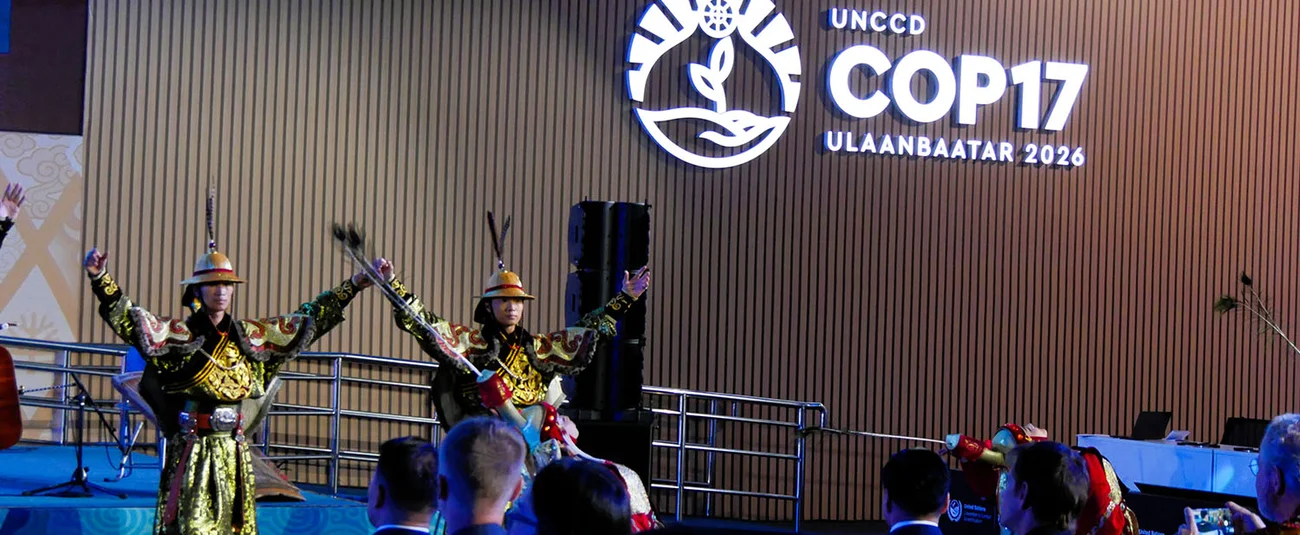
Ulaanbaatar, Mongolia – The 17th session of the Conference of the Parties (COP17) to the United Nations Convention to Combat Desertification (UNCCD) is underway in Ulaanbaatar, Mongolia, from August 17 to 28, 2026, under the theme “Restoring Land. Restoring Hope.” With over 12,000 representatives from 167 countries attending, the conference has emerged as a critical platform for translating global land restoration commitments into tangible action.
The Challenge: A Planet in Crisis.
Up to 40% of the world’s land is degraded, affecting billions of people and intensifying pressure on agriculture, water systems, and rural livelihoods. Mongolia itself, hosting the conference, exemplifies the crisis: nearly 77% of its territory is already degraded, making land restoration a matter of national survival. The UNCCD estimates that more than $2 trillion in cumulative investment will be needed by 2030 to restore degraded land, combat desertification, and strengthen drought resilience.
Africa’s Response: The Great Green Wall Takes Centre Stage
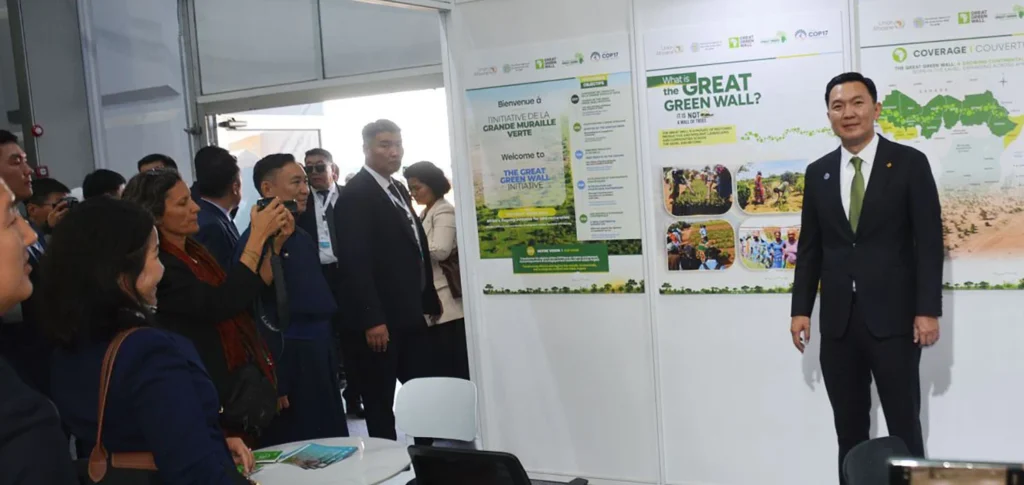
At COP17, the Great Green Wall (GGW) Initiative has become a focal point for Africa’s restoration ambitions. The Pan-African Agency of the Great Green Wall (PAGGW) Pavilion, co-hosted by the African Development Bank Group and other partners, has become a hub for forging partnerships to restore Africa’s landscapes. The initiative aims to restore 100 million hectares of land, sequester 250 million metric tons of carbon, and create 10 million green jobs by 2030.
Progress is becoming visible. As of the 2026 UNCCD report, approximately 1.66 million hectares are under restoration in the Sahel, with 24 million tonnes of CO₂ equivalent sequestered, 4.6 million jobs created, and 46 million people directly impacted. In Nigeria alone, over 48 million tree seedlings have been raised, with 10.8 million drought-resistant seedlings distributed to farmers to support agroforestry and boost rural incomes.
Financing the Restoration: From Commitments to Capital.
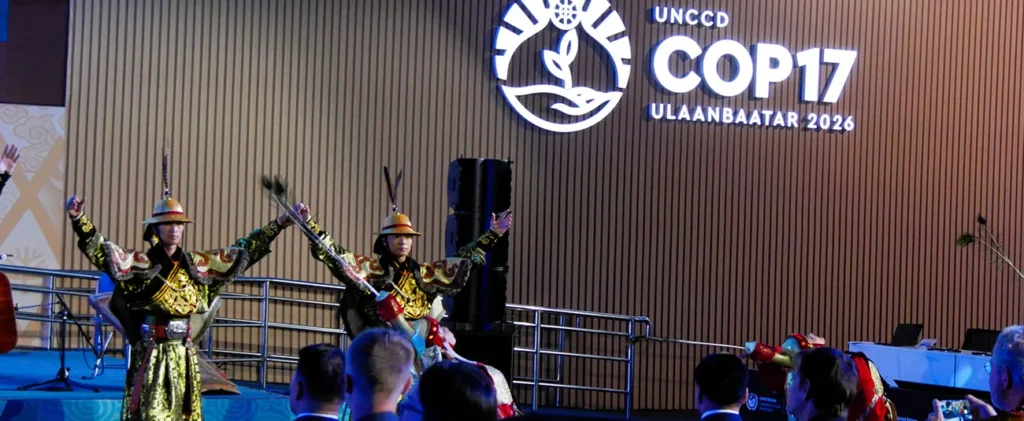
The African Development Bank has pressed for greater financing to restore degraded land in Africa’s fragile and conflict-affected regions. At a high-level dialogue co-organized with UNCCD, UNEP, and UNDP, the Bank introduced a proposed Fragility Financing Mechanism intended to move restoration from financing gaps to financing continuity.
Al Hamndou Dorsouma, Division Manager for Climate and Green Growth at the Bank, emphasized: “Sub-Saharan Africa is home to nearly half of the world’s fragile and conflict-affected settings. For Africa, land restoration is a way of promoting peace and stability, an opportunity to build resilience and to address the underlying drivers of fragility before they evolve into larger conflicts.”
The Bank has already demonstrated this approach through a $9.5 million project to restore the ecological and economic functions of Lake Chad and a large-scale program building climate resilience for food and livelihoods in the Horn of Africa.
The restoration financing landscape is evolving. The Mirova Sustainable Land Fund 2 (MSLF2), a blended finance vehicle building on the pioneering Land Degradation Neutrality Fund, is mobilizing public and private capital for regenerative agriculture, agroforestry, and sustainable forestry in emerging markets. The fund has already supported projects such as Pamoja’s sustainable macadamia production in Kenya and Tanzania, which aims to reach 13,000 small-scale producers on 6,200 hectares by 2031, and Koa’s cocoa value addition in Ghana, which creates 250 jobs and generates additional income for more than 10,000 cocoa farmers.
A Call to Action: Restoring Rwanda’s Land
While COP17 focuses on global and continental strategies, restoration begins at the community level. In Rwanda, the East Green Deal project through Here For Hope Foundation demonstrates that restoration succeeds when it aligns with local economic interests. Farmers in Eastern Rwanda are planting trees that provide livestock feed, alternative income streams, and stable soils, contributing to Rwanda’s goal of increasing national forest cover—currently at 30.4%—and its commitment to the Bonn Challenge.
Earth Focus Network, a unified digital ecosystem connecting organizations, businesses, individuals, and funders committed to environmental protection and sustainability, is contributing to this restoration effort. We are committed to planting 10,000,000 trees by 2030 to restore degraded land, sequester carbon, and support local communities in Rwanda.
Earth Focus Network: Connecting Changemakers for Restoration
Why We Exist
Climate, poverty, and social inequity demand urgent action—yet the sector remains fragmented. Over 60 climate funds with different rules, 500+ agreements in silos, and the Global South receiving only 18% of climate finance. This fragmentation wastes time, delays solutions, and excludes vulnerable communities.
Our Solution
Earth Focus Network is a unified digital ecosystem that centralizes grant and job boards, directories, smart matching, and networking into one seamless platform—eliminating fragmentation and saving time. With a vetted community of passionate changemakers, we make sure opportunities are never missed.
What We Offer
Our self-hosted platform allows members to:
- Connect with fellow environmental professionals
- Post blogs, images, and videos
- Join groups and forums
- Share resources and opportunities
No third-party apps. No barriers. Just a space for collaboration and growth.
Our Impact
The network builds a lasting, self-sustaining ecosystem of changemakers solving climate, poverty, and social inequity. As membership grows, the network effect strengthens—each new connection creates more opportunities. Vetted organizations gain visibility, accessing funding, talent, and partners they would never find alone.
Be Part of the Restoration Movement
Through the information we offer, you may choose to contribute to our mission today to help us reach 10,000,000 trees by 2030. Every tree planted restores degraded land, sequesters carbon, and supports local communities.
Make a difference today. Support our tree-planting initiatives in Rwanda and be part of the collective movement to restore the earth.
How to Join Earth Focus Network
- Join Our Community—Connect with fellow changemakers and start networking immediately
- Create Your Account—Set up your professional profile on the Earth Focus Network website
- Apply for Vetting—Ensure you join a trusted, high-impact community
- Make Your Contribution – Support reforestation and community projects (starting at $20/month)
- Book Your 1:1 Matching Session – Get personalized connections to the right partners and opportunities
Be Part of the Movement
“You are not just a member. You are a co-creator of a regenerative future.”
The planet needs all of us. Earth Focus Network is a living ecosystem of people who refuse to accept the status quo. The time is now.
🌐 Visit us: www.earthfocusnetwork.com
📧 Email us: Info@earthfocusnetwork.com